

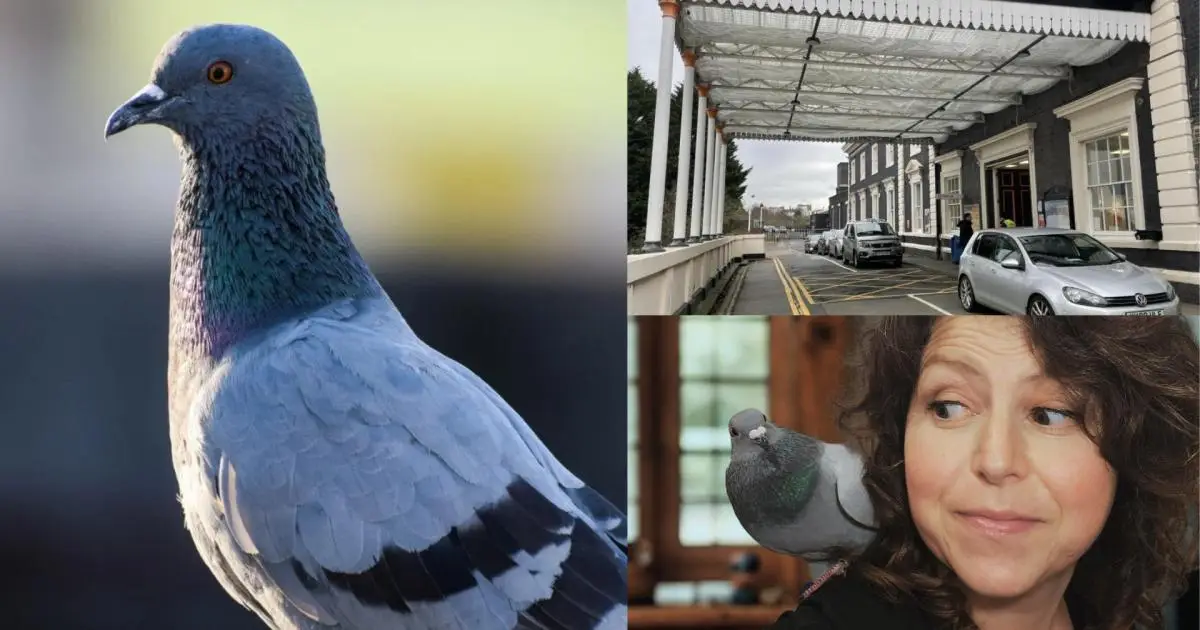

CONTROVERSIAL pigeon culls have taken place at two train stations serving commuters from Worcestershire.
Sharp-shooters reduced numbers of the ‘health hazard’ birds at Stratford-upon-Avon and Worcester Shrub Hill on seven occasions last year.
So-called lethal control was condemned by campaigners earlier this year after it emerged that it had been used at Manchester Victoria Station.
It has since been disclosed that air rifles have been used by the contractors on four occasions at Stratford and three at Shrub Hill since February 1, 2025.
Another occasion at Stratford was aborted, according to information released by West Midlands Railway under the Freedom of Information Act.

Fourteen pigeons were culled at Stratford and an unspecified number in Worcester.
Sue Joyce, president of the National Pigeon Advocacy Association, said: “What’s happened at Worcester and Stratford-upon-Avon is really sad and a reflection of what’s happening all over the country at railway stations.
“It’s cruel and unnecessary to shoot pigeons but the main reason against it is that it doesn’t work. If it did, there would be no pigeons left as it’s been happening for thirty years now.
“What will happen in a cull is that there will be more food left over, so other birds will fly in.
“They are intelligent birds and they won’t miss the opportunity.”
Sue Joyce of Little Green Pigeon has seen a different side to the creatures (Image: Little Green Pigeon)
What are the alternatives to culling?
Ms Joyce, also of Little Green Pigeon CIC, wants pigeon numbers reduced through providing controlled environments where they can nest while real eggs are replaced with plastic fakes.
“It’s barbaric and it needs to stop,” she said of the cull.
“But the tide is turning. People were horrified when they saw what was happening in Manchester and there is basically a ban there now.
“It’s a shame to hear it is going on at other stations but I am not the least bit surprised.”
Joanna Egierd, of welfare group Penny’s Pigeon Aid, also wants controlled spaces to be found where pigeon numbers can be ethically controlled.
“I don’t know all the efforts they’ve tried, but culling, aside from being ethically questionable, is not the best solution as pigeon populations can bounce back very quickly,” she said.
“It would be more ethical to gradually reduce the population by different methods, like improving waste management, removing areas to nest and sometimes using contraceptive feeds, as was used in some cases.”
A pigeon cull was carried out at Worcester Shrub Hill train station (Image: Supplied)
Why are the culls being carried out?
According to the British Pest Control Association, the birds carry a “large variety of diseases and insects”, with their nests and fouling also being public health concerns.
Pigeons are protected by the Wildlife and Countryside Act 1981, but can be culled if all other means of getting rid of them have been exhausted.
Contractors Safeguard Pest Control carried out the work in Worcestershire and Stratford, according to the disclosure.
The cost was £2,285 for the Warwickshire station, with no information given for Shrub Hill.
‘It’s a long slow death’. Upset over birds trapped in netting at petrol station
Network Rail gets go-ahead to make city railway station more accessible
Shrub Hill walking and cycling route ‘nearly complete’
Stratford has netting to the front access and pigeon spikes to the canopy girders on both platforms as non-lethal measures, while Shrub Hill has netting to some areas on platform two and spikes to the remaining platforms.
A spokesperson for West Midlands Railway said: “Large numbers of pigeons roosting at stations pose a health risk to passengers and staff.
“We use preventative methods to deter pigeons from stations such as netting or physical barriers.
“Pest control activity may be carried out as a last resort if the number of pigeons becomes unmanageable.”