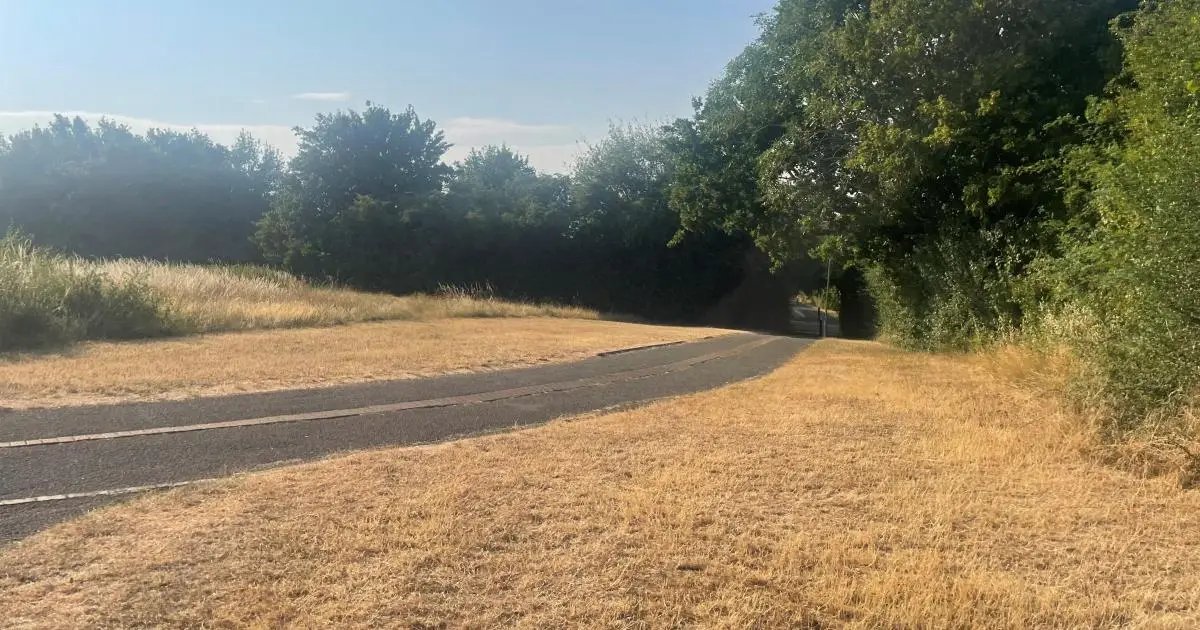

A DROUGHT has been declared in Worcestershire as the county experiences unprecedented dry spells.
The Environment Agency has announced the West Midlands is set to experience its driest July on record during what is being described as a ‘flash drought’.
This rapid-onset drought is the result of record low rainfall combined with unusually high temperatures.
Helen Wakeham, director of water at the Environment Agency and chair of the National Drought Group, said: “The hot and dry weather means we are currently using water faster than nature can replenish it.
“A second consecutive summer drought is an exceptionally serious situation and one that will have long-lasting impacts on our environment, wildlife and the economy.

“We want everyone to stay safe and hydrated during the hot weather, but every drop we can save is a drop more for nature and agriculture.”
The last time rainfall was registered at the rain gauge in Crowle was 0.4 millimetres on June 22, according to Defra’s Hydrology data.
More than 1mm of rainfall in a single day has not been recorded since June 16, more than six weeks ago.
Fish are being rescued from the abnormally low water levels in the River Teme (Image: Environment Agency)
This weather has had a massive toll on the livelihoods of farmers across Worcestershire, who have said they are facing ‘significant challenges’ in the current climate.
In response to the drought, The Environment Agency has intensified actions, including restrictions on water abstraction, increased monitoring, and wildlife protection efforts.
It is operating its River Severn Regulation system to safeguard water supplies for six million people, with water being released from reservoirs when flows are predicted to drop below the prescribed minimum flow.
The River Onny, a tributary of the River Teme, has dried up (Image: Environment Agency)
READ MORE: Action taken to protect River Severn levels as dry weather continues
Will Lang, chief meteorologist at the Met Office, said: “The warm and exceptionally dry conditions experienced across much of England over recent months are continuing to have a significant impact.
“While there are indications of occasional unsettled spells during the first part of August, bringing the chance of rain to some locations, there is currently little sign of the widespread, sustained rainfall that would be needed to make a significant difference to the areas most affected by the dry weather.”
READ MORE: Historic 183-year-old lock reopens after specialist repairs
The West Midlands joins East Anglia, Hertfordshire and London, Thames Valley, Hampshire and the Isle of Wight, Devon and Cornwall, and Wessex in drought status.
Other regions remain in a “prolonged dry weather” category, and only Yorkshire and the North East are currently classified as normal.