


PLANS to protect an “internationally important” historic artefact have reached the next stage – and new heights.
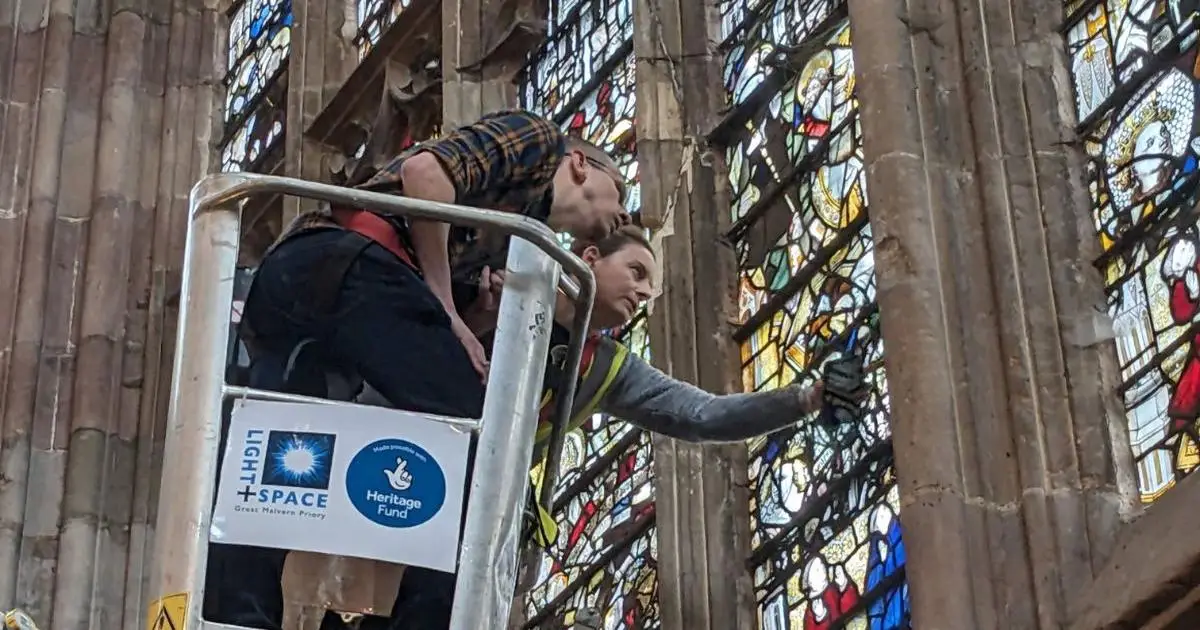
Visitors to Great Malvern Priory in recent days may have noticed cherry pickers going up as inspections are carried out on the eight stained glass windows, which are among the finest in any parish church.
They are being surveyed by architects, structural engineers, surveyors, buildings archaeologist and stained glass conservators, as part of plans to conserve and repair the windows.
READ MORE:
Devastated parents still waiting for answers one year after son’s death

More than a dozen homes planned for village near Malvern
Pub could face closure after flat declared off-limits by fire service
While the surveys are being carried out, some areas of the Priory may be inaccessible.
The repairs are part of a wider project, dubbed Project Light and Space, which will also aim to make the building more accessible, update its toilet and hospitality features, reduce its carbon footprint, and provide volunteer and apprenticeship opportunities.
To do all of this, the Priory is hoping to obtain a grant from the National Lottery Heritage Fund of £8.5million, having already been awarded £695,362 to develop the plans.
Vicar, Rev’d Roger Latham said: “It’s a fantastic opportunity to make the Priory accessible to all, as well as helping people to understand the history of our wonderful building and how people have worshipped here for nearly 950 years and, if we are awarded Heritage Fund Delivery phase funding, we’ll be able to update our facilities, too.
“Whilst the cherry pickers are at the Priory, some areas aren’t accessible, for everyone’s safety, but watching the surveys happen is fascinating in itself.
“If you are making a special visit, check the Priory’s website for any changes to our opening hours.”
Great Malvern Priory was founded in 1085, with much of Malvern having been built around the landmark.
It is now a tourist attraction, welcoming around 40,000 visitors each year.
The medieval stained glass windows are considered to be a rare illustrated guide to the development of painting styles and glazing styles throughout the 15th and early 16th centuries.
