

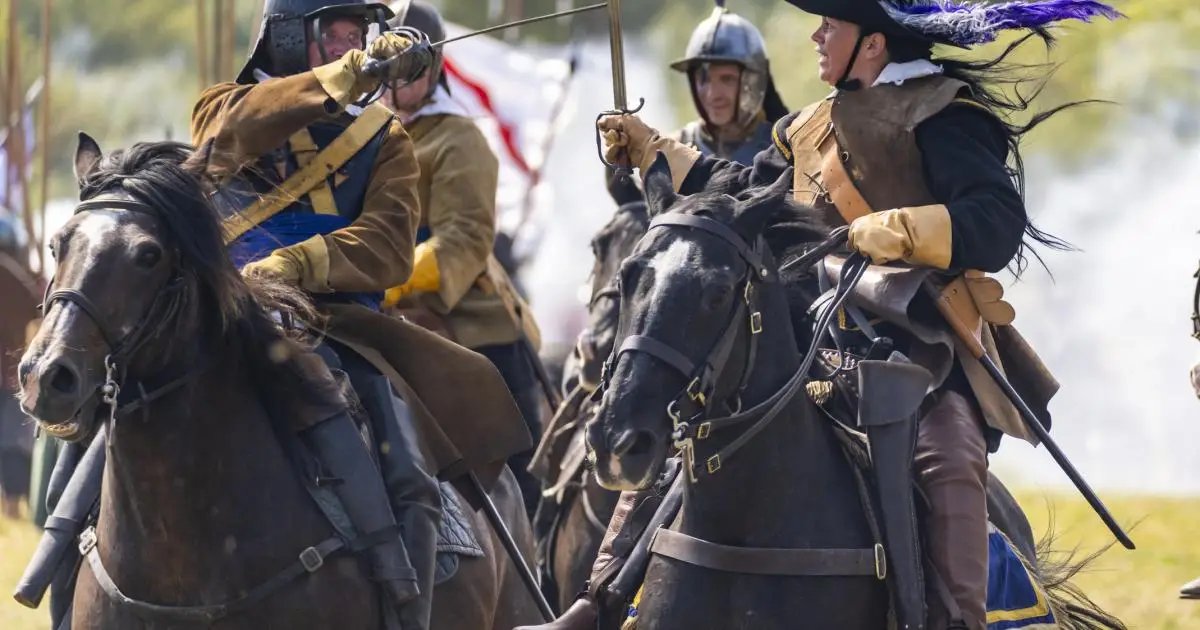

HISTORIANS will delve deeper into the aftermath of the English Civil War which began and ended in the city, tracing the troubled road from bloodshed to peace.
A study day exploring the aftermath of the English Civil Wars is set to take place in Worcester on October 10 to mark the 375th anniversary of the Battle of Worcester.
Hosted by The Battle of Worcester Society in partnership with The Cromwell Association, the event will be held at The Old Palace on Deansway, formerly the Bishop’s Palace.
VENUE: The Old Palace, formerly the Bishop’s Palace, is a venue for the study day on the aftermath of the English Civil War (Image: James Connell/Newsquest)
The Cromwell Association Study Day 2026 – ‘Ending the Civil Wars’ will focus on what happened after the fighting stopped, exploring how society transitioned from conflict to peace and what that meant for those who lived through it.
John Goldsmith, Chair of The Cromwell Association, said: “Given the theme, the location could not be more appropriate. We aim to be a bridge between the academic world and the interested lay person.
“The subject will hopefully appeal to a broad range of local people who we look forward to welcoming on the day.”
The Battle of Worcester, fought on September 3, 1651, was the final major clash of the British Civil Wars.
While the anniversary naturally draws attention to the battlefield, the study day aims to look beyond the fighting to examine the transition to peace and its impact on society.
Talk to explore ghost stories and devil sightings during Civil War
All you need to know about Battle of Worcester commemorations as anniversary nears
Celebrated historian’s entertaining, unscripted speech at battle anniversary dinner
Why we should fly the many flags of England and learn to love this beautiful country
Daniel Daniels, Chairman of The Battle of Worcester Society, said: “This is a particularly appropriate event for Worcester in this 375th anniversary year.
“We have spent 2026 commemorating the Battle of Worcester and reminding people of the extraordinary significance of what happened here in 1651.
LIBERTIES: Oliver Cromwell’s death mask at The Commandery in Sidbury, Worcester (Image: James Connell/Newsquest)
“But the story does not end when the fighting stops.
“The really interesting question is what happened next – how did society respond, how did people live with the consequences of war, and how did the country move from conflict towards peace?
“That is what makes this Study Day so interesting. It takes the story beyond the battlefield and looks at what the end of the Civil Wars actually meant for the people who had lived through them.”
The programme features a line-up of speakers from leading universities who will address topics including the broader end of early modern civil wars, the human cost of conflict, Cromwell’s England, and the creation of the early republic.
Professor Peter Gaunt from the University of Chester will open the day with a talk on how civil wars and internal conflicts in early modern Europe came to an end.
Professor Darren Oldridge of the University of Worcester will discuss perceptions of the Devil in Cromwell’s England.
Olivia Bennison from the University of Oxford will examine the lasting impact of the wars on those who lived through them, focusing on disability and the human cost of conflict.
The afternoon will include talks on political identity, ceremony, and the creation of the English Republic, followed by a roundtable discussion with all speakers.
Mr Daniels said the study day is part of a wider programme marking the 375th anniversary of the Battle of Worcester.
The event will be accessible both in person and online via Zoom.
Registration and coffee begin at 10.20am, with a welcome and introduction at 10.45am.
