

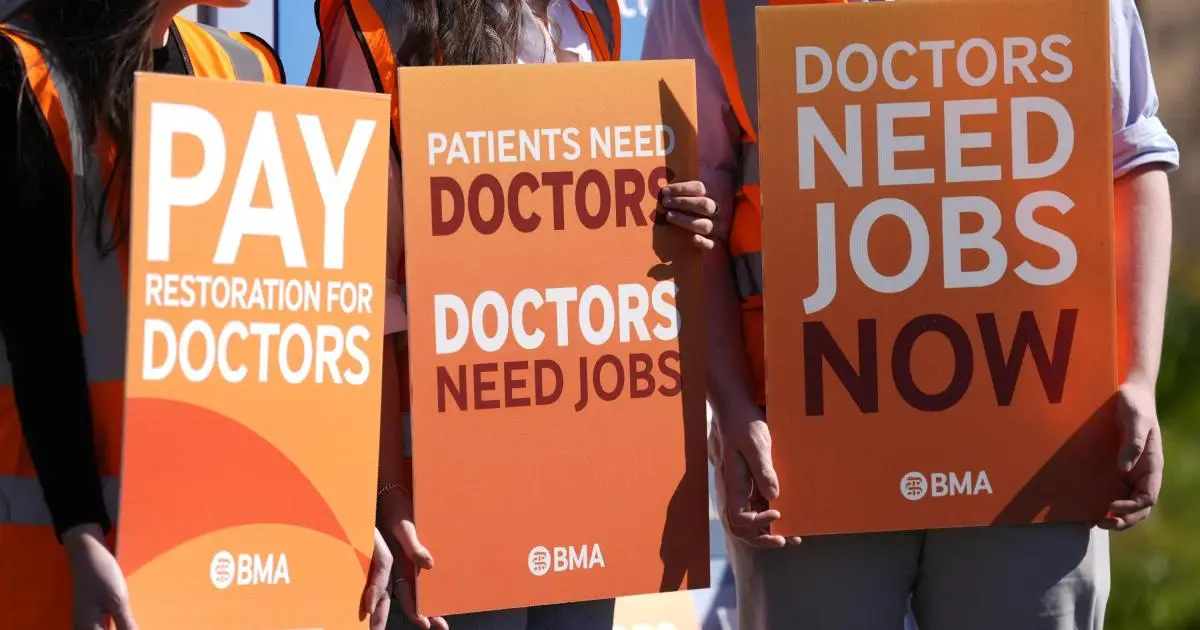

HOSPITAL bosses have become “sadly familiar” with managing industrial action.
The latest round of doctors’ strikes ended on Monday (April 13), with patient safety maintained throughout the six-day walkout, according to Worcestershire Acute Hospitals NHS Trust.
Members of the British Medical Association (BMA) took strike action after its resident doctors committee rejected a government pay offer.
Glen Burley, chief executive of the acute trust, said: “A big thank you to all of our staff who have stepped up to provide cover during the recent resident doctors’ strikes, which finished at the start of this week.
“We managed to maintain patient safety throughout that period but it’s something that we’ve become sadly familiar with managing.

“And it comes with a cost, which is something that we’ll have to bear in mind when we come back to our financial position.”
Health secretary Wes Streeting said staff had worked round the clock to “keep the show on the road”.
“One of the things I am proud of is during previous rounds of resident doctors strikes we’ve maintained 95% of planned care, improvements in A&E and emergency response times,” he said.
“However, I wish we were not putting so much on the shoulders of other NHS staff or spending £300 million on this strike.
“That money would have been better spent implementing this offer to improve resident doctors’ pay and career opportunities.
“Resident doctors had a 28.9 percent pay rise in the first weeks of this government. There’s a deal on the table for an average 4.9 percent pay rise for this year which increases to 7.1 percent for some of the lowest paid doctors.
One in 10 nurses missing from key wards at city hospital
Dentists prioritise patients who are easier to treat, health bosses admit
City made millions from parking app payments last year
“My door is open – as it always has been. I am asking the resident doctors committee to meet me so we can resolve this dispute and put an end to these needless cycles of disruption.”
Dr Jack Fletcher, chairman of the BMA resident doctors committee, has said the strikes were “entirely avoidable”.
“If we keep treating doctors as an inconvenience rather than an asset, we will end up with an NHS that simply doesn’t have enough residents or consultant doctors to give patients the surgery and procedures they need,” he said.
“We’re willing to end these strikes, Mr Streeting needs to be too.”