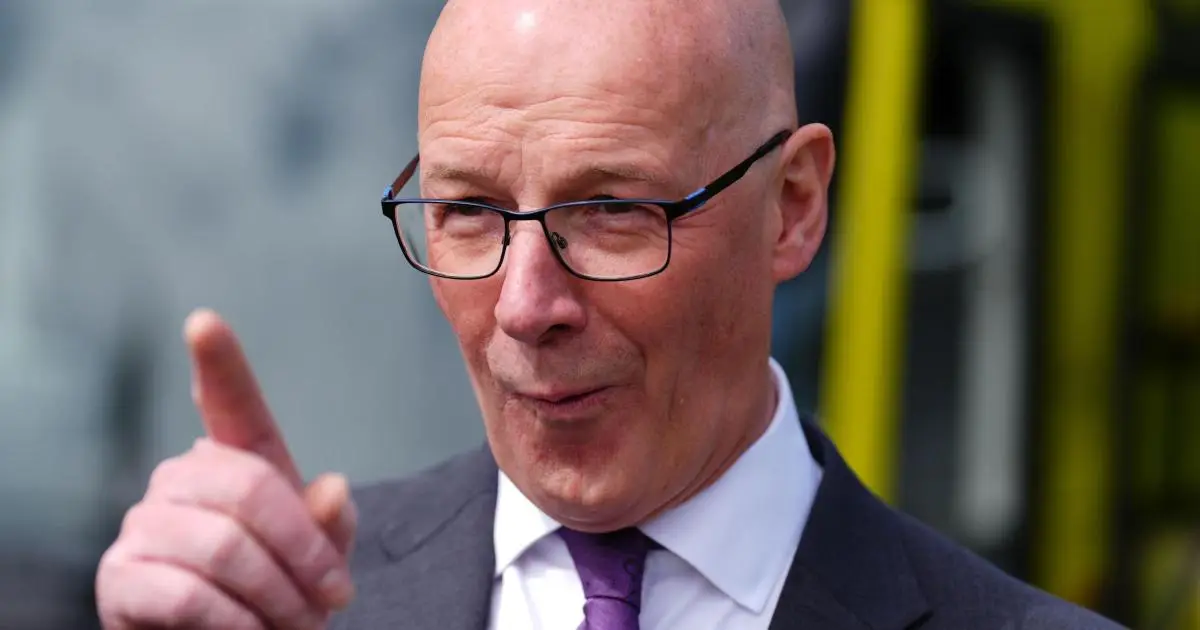

A new poll on the eve of the Holyrood election showed the SNP’s lead tightening as leading experts warned the “odds are against” John Swinney winning a majority.
With less than 24 hours until polling stations open in the 2026 Scottish Parliament election, research by More in Common suggested support for Labour may be rising.
Support for the SNP on both the constituency and regional ballots was down by three points from the end of April to stand at 32% and 23% respectively.
On the regional ballot, Mr Swinney’s party was only just above Reform UK – who were polling at 22% on that and 18% on the constituency ballot.
But the pollsters said the “most notable movement” in the final poll of the campaign was from Labour – whose constituency vote share was up three points to 20%, with support on the regional ballot rising by four points to 19%.

The poll – one of several published on the final day of campaigning ahead of the May 7 election – came as elections expert Professor Sir John Curtice said all the latest research indicates the SNP is “not quite far enough” ahead with voters to win more than half the seats at Holyrood.
SNP leader and Scottish First Minister Mr Swinney has focused his election campaign on winning an overall majority at Holyrood, believing such a result will be key to forcing Westminster to grant a second independence referendum.
While Mr Swinney has already pencilled in 2028 for such a vote, Sir John said key battles in a “handful of seats” could deny the SNP an overall majority.
Speaking on BBC Radio Scotland’s Breakfast programme on Wednesday, the polling guru said studies show the Tories may “just hang on to a handful of constituency seats and the Liberal Democrats will just make a handful of gains”.
This, combined with the prospect of parties such as the Greens and Reform UK winning in some areas, could mean “there are just a relatively small number of contests where the other parties are going to hang on, or in one or two instances make a gain, and that is going to stand between the SNP and victory”, he said.
He added: “The truth is trying to forecast exactly what is going to happen in individual seats is very, very difficult.
“If the cookie were to crumble just slightly in the SNP’s favour, the Greens just miss out on some of their hopes, then maybe the SNP might still make it.
“But if the polls are right, the odds are against it and the SNP will need a lot of luck.”
He said support for the SNP is “well down” from the last Holyrood election in 2021 – when the party, then under Nicola Sturgeon, polled almost 48% of the constituency votes.
His comments came as a new multilevel regression with post-stratification (MRP) poll by YouGov suggested the SNP will win 62 Holyrood seats on Thursday – three short of the 65 needed for an overall majority.
YouGov also predicted Reform UK would emerge as the second largest party on 19 seats, two more than Labour on 17.
The Scottish Greens could win 16 seats at Holyrood – which would be the party’s best-ever result – including taking the Edinburgh Central constituency being contested by the Scottish Constitution, External Affairs and Culture Secretary Angus Robertson.
The research went on to predict the Scottish Liberal Democrats could have eight MSPs – double the four they won in 2021 – while the Tories could go from 31 seats to seven, making them the smallest party.
MRPs use voter intentions, demographics, previous voting behaviour and constituency information to project the number of seats parties could win.
In April, YouGov said such a poll had suggested 89% of simulations it ran resulted in the SNP winning an outright majority – however this was now said to have fallen to 11%.
Another MRP poll, this time by Survation, projected the SNP would win 59 seats in the new Parliament.
Reform UK – led in Scotland by Lord Malcolm Offord – was forecast to come in second place with 18 seats, narrowly ahead of Labour on 17 and the Scottish Greens with 16.
Survation found that “the SNP is on course to win the most seats by a wide margin” but it pointed out its central projection of 59 seats was still “six below the 65 needed for a parliamentary majority”.
Another poll out on Thursday by Ipsos also put the SNP in the lead but, with this showing the party’s support falling back slightly on both constituency and regional ballots, Ipsos Scotland managing director Emily Gray said it “may dent the SNP’s confidence in achieving its hoped-for majority”.
While she added that their research found a quarter of voters could still change their minds about who to back, Ms Gray stated: “The race for second place in voting intentions looks too close to call, with Scottish Labour narrowly ahead of Reform on the constituency vote but Reform outpacing Labour on the regional list vote – where the Greens also appear to be in contention, if they can get their voters to turn out.”
With 1 in 4 voters saying they may still change their minds about which party to vote for, all Scotland’s parties still have something to play for in this final day of campaigning.
Reform UK’s support looks the firmest of any party’s, with 83% saying they’ve definitely decided. pic.twitter.com/v8JPE81Qfs
— Emily Gray (@EmilyIpsosScot) May 6, 2026
The Ipsos poll, carried out for STV News/ITV Peston, put the SNP comfortably in front on both ballots, with support levels of 35% and 26% on the constituency and regional ballots respectively.
Labour were on 20% in the constituency ballot, with this up by five points from a previous Ipsos poll in March, putting them narrowly ahead of Reform UK on 18%.
Both the Liberal Democrats and the Conservatives polled 11%.
On the regional ballot, Reform UK were in second place on 18%, with the Scottish Greens third on 17% and Labour fourth on 15%. The Liberal Democrats, meanwhile, were on 11%, with the Conservatives sixth on 10%.
Ms Gray said: “This could be the worst-ever performance at a Scottish election for both Labour and the Conservatives if these numbers are replicated on polling day.
“But with one in four voters still saying they may yet change their mind, all the parties still have something to play for in the final day of campaigning.”