

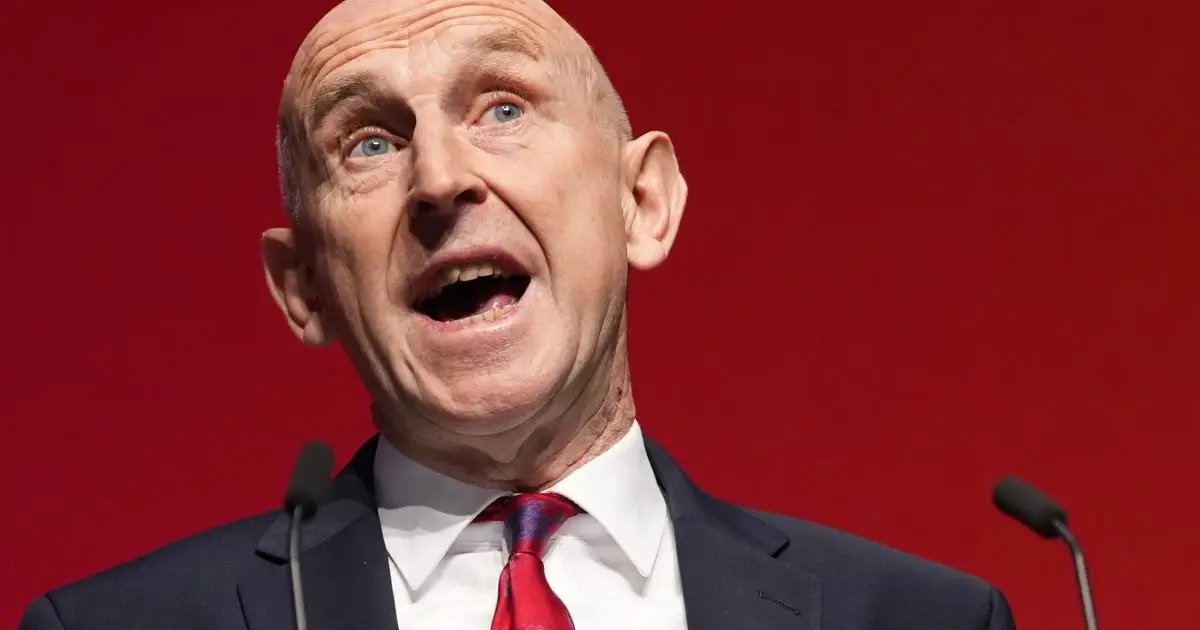

John Healey is facing calls to hit Britain’s biggest banks with a fresh tax rise ahead of his Budget, with a union chief claiming lenders are raking in “bumper profits” while households struggle with mortgage costs.
The Chancellor is looking for ways to raise revenue and keep the UK’s budget deficit under control as Government borrowing costs soar ahead of the October 28 Budget.
One option reportedly under consideration is reversing a tax cut introduced by former Tory chancellor Jeremy Hunt, which reduced the surcharge banks pay on their profits from 8% to 3%, according to the Guardian.
Paul Nowak, general secretary of the Trades Union Congress (TUC), backed restoring the higher rate, which the union estimates could raise £2.25billion a year.
He said: “Britain’s big four banks are making a billion pounds a week, while bonuses have hit a post-crash record.

“These are bumper profits – driven by high interest rates and households’ mortgage misery.
“The Treasury has already lost £6 billion in revenue from the Tories’ senseless bank tax cut – now it’s time to make sure banks pay their fair share.”
The TUC wants an even bigger increase, proposing a surcharge of 16% which it says could raise £24billion over four years.
Banks face fresh tax pressure ahead of Budget
The calls come as pressure mounts on the Chancellor to find money to support households facing the cost-of-living squeeze.
The Institute for Public Policy Research (IPPR) this week recommended a temporary surcharge on commercial banks’ windfall profits, which it estimated could raise £1billion as part of a wider package designed to bring in an extra £16billion.
The think tank said its proposals could help rebuild the Chancellor’s fiscal buffer, which it estimated had fallen by up to £15billion since the spring.
But business groups have warned that higher taxes could hit investment and make the UK less competitive as a financial centre.
Louise Hellem, chief economist at the Confederation of British Industry, said: “The financial services sector is vital to driving investment, innovation and business growth across the economy. Government has set the right direction through its Financial Services Growth and Competitiveness Strategy and the Leeds Reforms – the priority now is delivery.
“The autumn Budget should set the agenda for a competitive and predictable environment that turns those reforms into tangible progress, unlocking domestic investment, deepening UK capital markets and helping more firms to scale and grow.
“It should also avoid measures that would undermine competitiveness or weaken incentives to invest. With the business tax contribution already at a record share of receipts, that means avoiding further sector-specific taxation, including on a banking sector already facing a higher tax rate than competing international financial centres.”
Tory shadow chancellor Andrew Griffith said: “Britain needs growth. But a raid on the financial services sector will stifle it. Labour should be backing businesses and wealth-creators, not making their lives even harder.”
A Treasury spokesperson said: “As has always been the case, decisions on tax are a matter for the Chancellor to set out at fiscal events, rather than routinely commenting on rumour, speculation or proposals.”
Got debt on credit cards? Shift debt to 0% while you can – it may soon be harder! | Car Finance update | ISA & inheritance tax all in this weeks MARTIN LEWIS PODCAST. Listen via https://t.co/O7b14FLwb2 https://t.co/RCrSyznDx9 Or elsewhere pods are played
— Martin Lewis (@MartinSLewis) October 15, 2026
Chancellor warns of tough Budget
Mr Healey has warned the public to prepare for a tough Budget on October 28, as the Government faces pressure to support families and businesses while controlling borrowing.
Prime Minister Andy Burnham and the Chancellor have promised to help with cost-of-living pressures, even as fears over inflation driven by the US’s war with Iran have pushed up Government borrowing costs.
Speaking to the BBC from an International Monetary Fund meeting in Bangkok on Thursday, Mr Healey said: “It’s a tough time. People can people can see the global economic conflicts, they know the pressure it’s putting on them, they understand it’s putting pressure on the Government.”
He also suggested Government departments may not receive extra funding to cover pay rises for doctors and nurses.
“Where we want to do things, we have to make sure that we can pay for them within the budgets that we’ve got and control spending,” he said.