

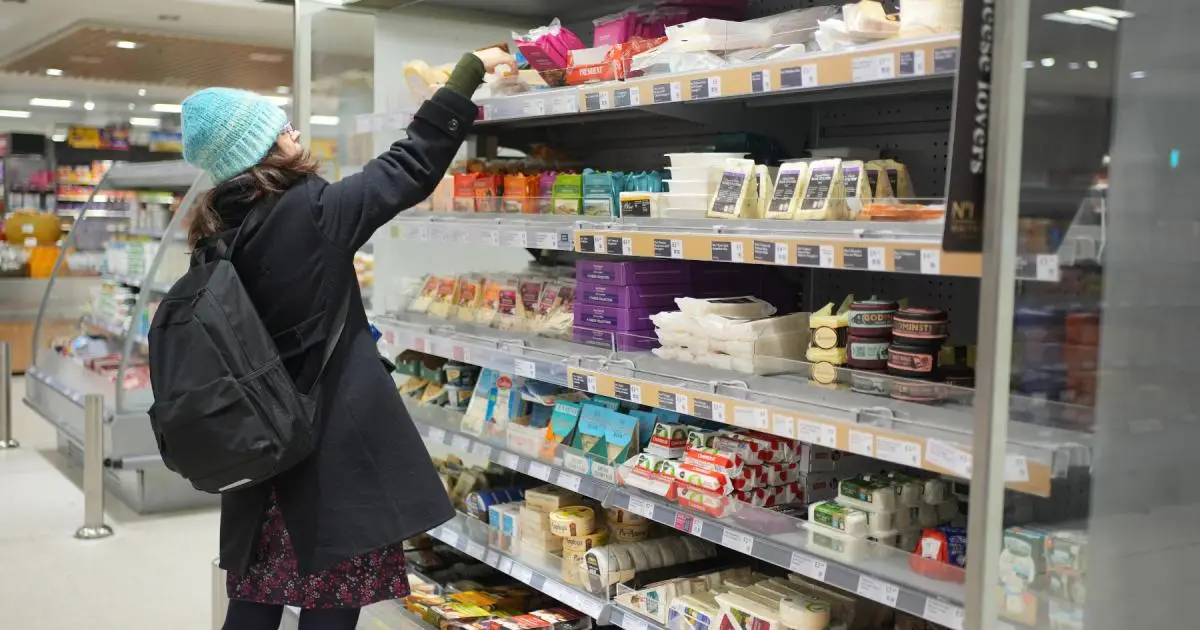

A government minister has warned that higher food and fuel prices could last for a further eight months once the US-Iran war is over.
Darren Jones, Chief Secretary to the Prime Minister, told the BBC’s Sunday with Laura Kuenssberg (aired on Sunday, April 26) that he was looking at the economic impact of the war “in a lot of detail”.
He shared that “price pressure” was more likely than gaps on supermarket shelves.
The US-Iran war has been ongoing since the end of February, and the blockade of the crucial shipping route, the Strait of Hormuz, has been a sticking point.
View this post on Instagram

A post shared by Darren Jones MP (@darrenjonesmp)
A post shared by Darren Jones MP (@darrenjonesmp)
BBC News reports that energy production and transportation across the Middle East has slowed or stopped entirely due to the conflict, causing supply chain issues and price rises globally.
Higher prices could last ‘eight plus months from the point of resolution’
Discussing how long the higher prices of energy and food would last, Jones shared that it could be for many months once the conflict is concluded.
He said: “Our best guess is eight plus months from the point of resolution that you’ll see economic impacts coming through the system.
“So people will see higher energy prices, food prices […] flight ticket prices as a consequence of what Donald Trump has done in the Middle East.”
Sky News reports that Jones is heading up a contingency planning group of ministers meeting twice a week to focus on live monitoring of stock levels and what plans are in place for addressing supply chain disruption.
They will assess how the closure of the Strait of Hormuz and the subsequent reduction in oil, gas and ammonia supply will directly impact the UK.
Prime Minister Sir Keir Starmer will also chair another meeting of a Cabinet committee on Tuesday (April 28), set up to deal with any shortfalls.
Ministers have stressed there are no shortages yet, and drivers should continue to fill up as usual and not change travel plans over fears of potential jet fuel shortages.
Jones has previously said: “This is not our war.
“The government made the right call to stay out of the conflict and only take defensive action to protect Britain’s interests.
“We’re acting now to prepare for, and mitigate where possible, the impact on our economy and domestic security as a result of the conflict.
“The prime minister wants to see a toll-free Strait of Hormuz reopened as soon as possible.
“The UK is working tirelessly with our international partners to find a permanent solution to this crisis and minimise the knock-on impact to households.