


FROM mysterious witch circles warding off evil to beautiful dovecotes tucked away on the county’s winding back roads, there are many National Trust hidden gems to explore.
If you’re bored with Croome or Hanbury Hall, there are other National Trust sites in Worcestershire to visit, and some of them are free to access, even if you’re not a member.
Most of us have visited (or at least heard of) the Capability Brown landscapes of Croome in High Green, near Worcester, or explored the corridors of Hanbury Hall, near Droitwich, both managed by the National Trust. Some will have ventured to Coughton Court or Baddesley Clinton in neighbouring Warwickshire or the moated manor house of Brockhampton in Herefordshire.
But how many have visited Middle Littleton Tithe Barn or explored picturesque Wichenford Dovecote, both much nearer at hand and within Worcestershire?
Some of these sites do not even require a National Trust membership to enjoy.

With fuel prices still high, people are looking after the pennies so these sites (all within Worcestershire) may be worth a visit.
(Image: James Connell/Newsquest photos)
(1) Witch circles at the Fleece Inn in Bretforton
These mysterious marks by the fireplace at the pub, owned by the National Trust, may date from medieval times and were designed to protect the pub from malignant forces. They are unique in the context of an English pub, though are found at other locations, including Tudor House in Worcester. The pub is free to enter and is known for fostering English folk traditions, from traditional music to wassailing and for championing asparagus. The building dates back to the early 1400s and the pub, which came into the ownership of the National Trust in 1977, is known for its seasonal menu. The pub is open daily between 11am and 11pm.
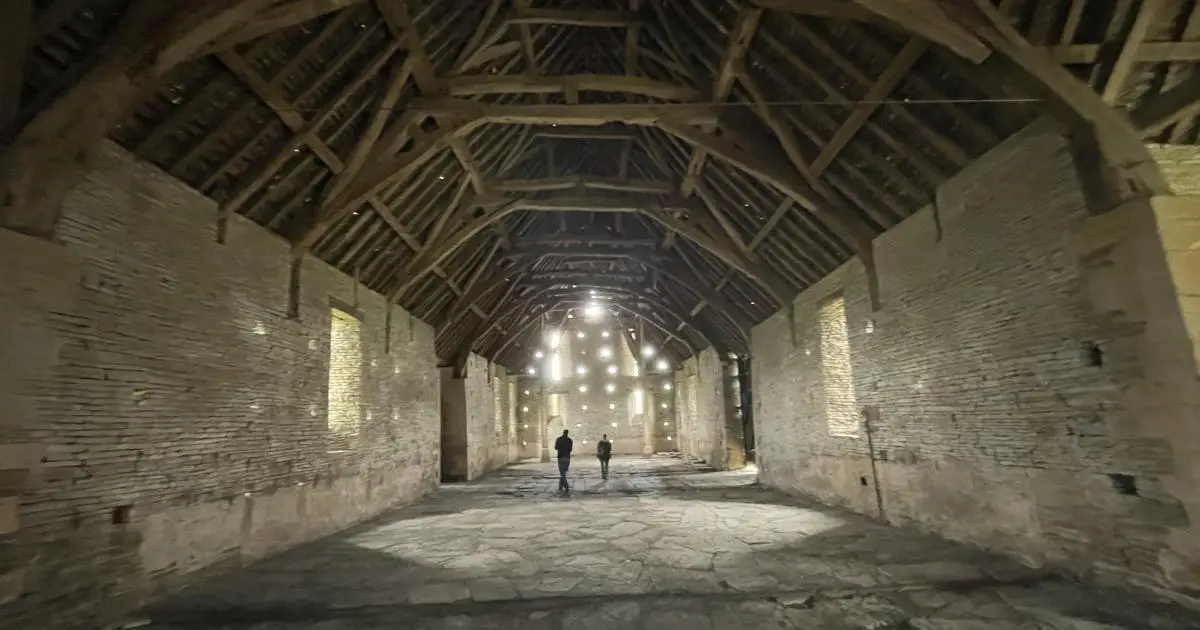
(2) Middle Littleton Tithe Barn
This grade I listed tithe barn dates from the Middle Ages and once served Evesham Abbey, little of which now survives. In a cruel twist of fate, the magnificent tithe barn survives intact while the abbey lies in ruins, a relic of the Dissolution. Once again, anyone can visit. Though there is no cafe, coffee shop or gift shop. Yet this hidden gem stands as an incredible survival and sheds light on a lost age. The tithe barn dates from at least 1376 though experts now believe it is older. The grand roof was made using the raised cruck method with large arched pieces of timber as the main struts. The building now open every day between 10am and 5pm.
HISTORY: Wichenford Dovecote (Image: James Connell/Newsquest)
(3) Wichenford Dovecote
Again, there is no need to be a National Trust member to enjoy this grade II* listed, 17th century timber-framed dovecote set in tranquil surroundings off Venn Lane.
A dovecote is designed to house pigeons or doves and has internal nesting holes. There are 557 wooden nesting boxes inside this one, restored in the mid 20th century.
Dovecotes served as a ‘living larder’ for wealthy households, providing a year-round source of fresh meat, eggs and dung for fertiliser.
Just bear in mind there are people living nearby, and not all of the land around the dovecote is open to the public. The electric gates should open automatically when you drive towards the site and there is limited parking available. It is open seven days a week, 24 hours a day.
(4) Hawford Dovecote
This beautiful and understated gem between Worcester and Ombersley near the A449 is described by the National Trust as ‘the last remnant of a former medieval monastic grange’ and a ‘curious crooked dovecote; which ‘sits prettily in the Worcestershire countryside’.
Visit historic barn and beautiful medieval pub ‘in one trip’ say National Trust
Charming hidden gem National Trust site you’ve probably never heard of
I visited ‘best medieval barn in country’ and didn’t need my National Trust card
Ex-National Trust site near Worcester with ‘riveting history’ named UK’s second best
A National Trust spokesperson said: “Surviving virtually unaltered since the late 16th century, the picturesque dovecote, retains many of its nesting boxes and original features.”
Historic England lists the site as important, describing the dovecote as a a square timber-framed steeply gabled tower-like structure with internal nesting boxes’. It is also open 24 hours day, seven days a week.
(5) Knowles Mill, Bewdley
This is a preserved derelict mill on the Dowles Brook in the Wyre Forest. This scenic mill, next to a meandering stream, dates from the 18th century and includes the frames of an overshot waterwheel.
The first definitive record of the mill was in 1757 when it was advertised for sale in Berrows Worcester Journal as anew facility.