

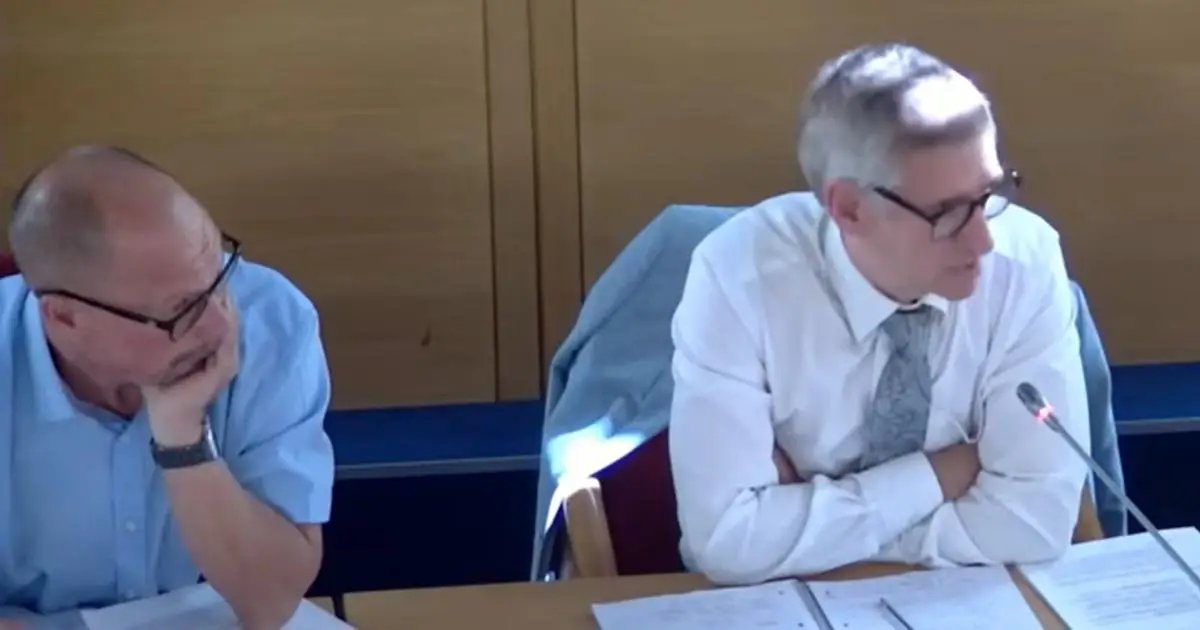

A COUNCIL has been described as being in “chaos” as its leader and deputy wrote contradictory letters to the government at the weekend.
On Saturday (September 25), Matt Jenkins, leader of Worcestershire County Council, joined the heads of several district councils in asking for the local government reorganisation (LGR) process – which could see the authorities replaced by a new unitary council – to be unpaused.
LEADER: Matt Jenkins said LGR being paused is not an invitation to reopen or resubmit proposals (Image: Phil Wilkinson-Jones/LDRS)
The letter to local government minister Angela Rayner called for LGR to be unpaused “as quickly as possible” and for the government to stick to its original decision of splitting Worcestershire into north and south unitary councils by April 2028.
On the same day, deputy leader Adam Kent wrote to Prime Minister Andy Burnham, welcoming the process being reviewed.

He urged the government to first create strategic authorities, led by directly elected mayors like in the West Midlands and Manchester, before forming one unitary authority for each constituent county – including Worcestershire.
ONE WORCESTERSHIRE: Adam Kent says the future shape of local government should be reconsidered (Image: Phil Wilkinson-Jones/LDRS)
Reform UK group leader Alan Amos said he predicted Worcestershire’s ruling coalition of Greens, Lib Dems, independents and one Conservative would “soon fall into chaos” when it was formed in May.
“And so it has,” he said. “On the biggest issue facing the county council – namely its future under LGR and whether there should be one or two new unitary councils to replace it.”
Cllr Amos said the current situation is “unprecedented”, with “the council leader and deputy stabbing each other in the back in public on a matter of enormous importance to the residents of Worcestershire”.
Cllr Jenkins said: “The letter sent to Government was simply a request to lift the current pause on LGR in Worcestershire, so we can move forward with implementing the decision made in July.
“This is particularly important for Worcestershire County Council given the significant financial pressures we continue to face.
County council faces £8m overspend as social care costs rise
Government minister’s LGR briefing was ‘complete cock-up’, says council chief
What Worcestershire’s delayed council reorganisation means for 2027 elections
“Following the Government’s decision and, despite it not being our preferred option, the county council accelerated work with the district councils to ensure we were prepared for the transition to two new councils from April 2028.
“The pause was not an invitation to reopen or resubmit proposals, as the decision on Worcestershire’s future structure has already been made.
“However, if there were to be an opportunity to revisit proposals, then, as agreed by county council, our preferred option would remain the One Worcestershire model.”
He said the greatest risk facing the county is now the uncertainty caused by continued delay.
Cllr Kent was asked if it was sustainable to have a leader and deputy at odds over such a big issue.
“Yes, it’s sustainable,” he said. “Matt and I work well together, and on the things that matter most we’re completely aligned.
“Those are getting the council’s finances back on track, tackling the pressures in adult social care and children’s services, and delivering for Worcestershire residents.
“We’ve never pretended to agree on everything. I said at the very first meeting after we took control that we differ on a number of issues, and we still do. That’s healthy, not a crisis.
“My position on reorganisation has never changed. I stood for election on a One Worcestershire platform, and I remain convinced that a single unitary is the best answer for residents.
“It’s best on cost, on management and on delivering better services. Nobody can seriously argue that two councils will cost less than one.
“I respect that others see it differently. Many councillors have changed their views over the past year, and given the financial position we face, and with no national reform of adult social care, that’s understandable.”