

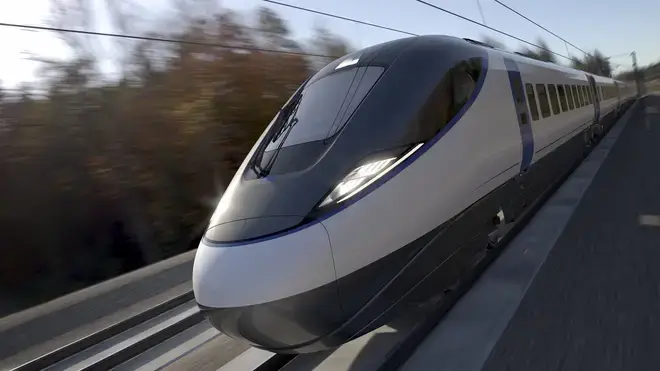

HS2 has been designed to allow trains to run at up to 360km/h (224mph).
Share
HS2 high-speed railway trains could be forced to run slower than initially planned to keep costs down.
The Transport Secretary, Heidi Alexander, is said to be weighing up options to save costs on the long-overrunning project between London and Birmingham.
Potential cost-cutting solutions include lowering operating speeds until special tests are carried out on the trains.
HS2 has been designed to allow trains to run at up to 360km/h (224mph), but most high-speed trains in this country run at up to 200km/h (125mph), while those on the Channel Tunnel Rail Link (HS1) operate at up to 300km/h.

This means the HS2 trains can not be tested at their intended operating speeds until a bespoke test track, or the railway itself, is complete.
By comparison, high-speed rail reaches up to 350kph (217mph) in China and Indonesia and 320kph (199mph) in Japan, Morocco and India.
TSSA, the union representing staff directly employed by HS2, has described the plans to run trains more slowly as "very unwise".
TSSA General Secretary Maryam Eslamdoust said: “I’m afraid this is a very unwise idea. HS2 must be safe, but instead of offering a choice between further delays or reduced speeds, Ministers should be seeking solutions now so that HS2 is running at full speed on day one.
“Frankly, anything else will leave Britain in the slow lane not just in comparison with other countries in Europe but also China.
"HS2 is vital because a vibrant growing economy in the 21st Century needs reliable high-speed rai links.
“If true, these proposals diminish our ability to grow local, regional and national economies, and therefore undermine what the government has long claimed as its top priority.”