


Share
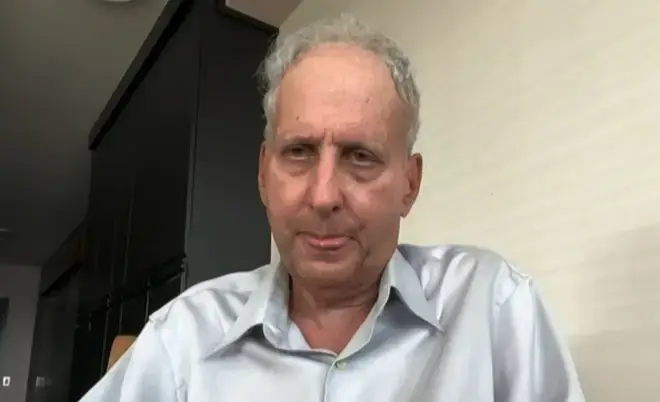
The US may need to consider a ground invasion to keep the Strait of Hormuz open, an Iran expert has told LBC.
Kenneth Katzman, a former US Congress expert on Iran, warned that a major escalation of the Iran war could become necessary.
The Iranian regime has used its control of the key shipping lane, the Strait of Hormuz, to spike crude oil prices to nearly $100-a-barrel.
Mr Katzman told LBC's Tonight with Andrew Marr that American boots on the ground may be needed to stop the Ayatollah's tightening grip on the flow of oil.
He told Andrew: "I don't think they know how to keep it open. There's some options that are being considered. They can keep it open. The issue is every option involves some risk.

"I mean, at the end of the day, the US could potentially be looking at a ground invasion to seize the Iranian coast that would keep it open. But I don't think the White House wants to do that.
On the key shipping lane, Mr Katzman said: "This has always been Iran's key leverage – its key playing card is [the Ayatollah] being able to shut down traffic.
"It's the same strategy that the Vietnamese used against us, and the Taliban. You know, create political problems for the President, create uncertainty in the US public, create opposition in the US public and hope that the President backs down.
The alarming warning came after Iran's new Supreme Leader vowed to 'avenge the blood of Iranians' and to continue the blockade on the Strait.
Mojtaba Khamenei, 56 – the second eldest son of the late Ayatollah Ali Khamenei – has not been seen since being appointed Supreme Leader on Monday.
His father and wife were both killed in a joint US-Israeli air strike on February 28 – a strike that marked the start of the war, with subsequent reports suggesting Khamenei was seriously injured and 'remains in a coma' in hospital.
In a statement read out by a presenter on state television on Thursday, Khamenei said that the "lever of blocking the Strait of Hormuz" should still be used by Iran going forward.
The decision to allow the anchor to deliver the written statement in place of a personal appearance by Khamenei has fuelled rumours surrounding the Supreme Leader's condition.
The statement continued by insisting that Iran would not refrain from avenging the "blood of its martyrs", after a US strike near a school killed 168 people, including 110 children.
"We are not an enemy of the countries around us, and we are only targeting the bases of those Americans," the statement continued.
Implying unity was now required to unite the Gulf, he said: "We send a message to the leaders of the region and emphasise that we are going to have good relations with the countries around us."
The Supreme Leader also called for American bases in the region to close immediately.
"The existence of the US bases in [Iran's neighbours] and usage of those bases to attack Iran is not benefiting the region and they must be closed."
"A limited amount of this revenge has so far taken concrete form, but until it is fully achieved, this case will remain among our priorities."
Mojtaba has kept a low profile in recent years, a figure described as a “veteran of the Ramadan war” by state television amid reports that he has been exercising influence behind the scenes.