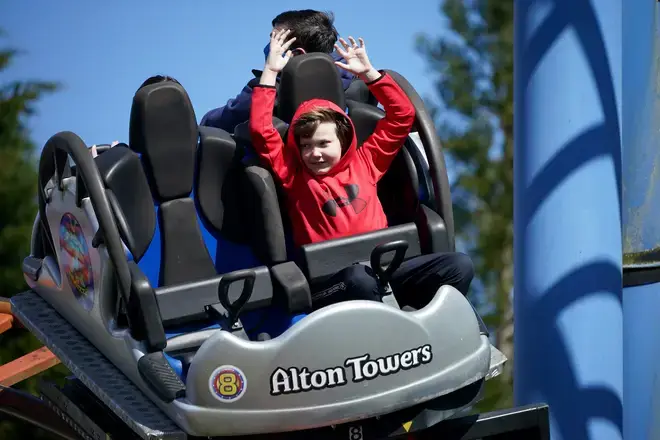

The reversal follows widespread backlash from people with autism, ADHD and anxiety
Share
Alton Towers has backtracked on its controversial plan to restrict access to its disability queuing system, following widespread criticism from people with autism, ADHD and anxiety.
Merlin Entertainments, who operate the park as well as attractions including Chessington World of Adventures and Legoland Windsor, had planned to introduce new eligibility rules for its Ride Access Pass (RAP), which provides a non-queueing option for people unable to stand in long lines.
Under the now-scrapped plan, visitors who only had "difficulty with crowds" would no longer have qualified for the pass.
The company had planned to trial the changes over the February half-term.
Following backlash and an online petition signed by more than 25,000 people, the company said it had “listened carefully to the extensive feedback” and would "pause the trial" while alternative options are considered.
The company also apologised to those affected by the proposal.
The planned changes sparked anger among disabled visitors and advocacy groups, who warned the move risked excluding many people who rely on the system to visit attractions safely.
Critics argued that conditions such as autism, ADHD and severe anxiety can make crowded queue environments overwhelming or distressing, even where physical mobility is not affected.
One user on X said: "I have ADHD. Alton Towers removing disability access for people like me is not fairness, it's exclusion."
Announcing the U-turn decision on Thursday, Merlin’s chief operating officer Rob Smith said the company had heard from many Ride Access Pass users who felt the changes would worsen accessibility rather than improve it.
He said: “Whenever we make changes to the Ride Access Pass, it’s because we genuinely want to improve the experience for guests who rely on it.
“They’ve told us loud and clear that the current system isn’t working.”
Mr Smith said the system remained under “huge pressure” due to growing demand, with some disabled visitors experiencing longer waits than those in standard queues — something he said was “not the experience we want for anyone”.
He added that the company would now take time to reflect on feedback and begin a broader consultation with disabled guests, accessibility specialists and other operators across the industry.
The proposed changes followed a decision by Nimbus Disability, the organisation used by Merlin to verify additional needs, to split eligibility related to standing and queuing into two categories: “difficulty standing” and “difficulty with crowds”.
Under the proposal, quicker access would have remained for guests with difficulty standing, urgent toilet needs or level-access requirements, but not for those whose primary difficulty involved crowds.
The now-abandoned plan would still have included support for neurodivergent guests through measures such as sensory rooms and quiet spaces.
Nimbus said the changes were developed in response to concerns from visitors about how disability needs were evidenced.
The British Association of Leisure Parks, Piers and Attractions (BALPPA) said increasing pressure on accessibility systems was affecting attractions across the sector as a whole.
Chief executive Paul Kelly said: “British attractions have made significant progress with accessibility, but are facing operational challenges with increasing demand from guests.
"We support Nimbus’s continued efforts, and their input will be invaluable as we continue to evolve our approach.”
Despite the reversal, Merlin said discussions around how to balance accessibility with rising demand for disability access schemes would continue.