


LBC joined Met Police interceptors as they seek to tackle phone theft in the capital
Share
“He’s by Victoria Station… he’s heading towards Buckingham Palace… Belgrave Road… Vauxhall Bridge – someone cover the bridge!”
The ‘golden hour’ after a crime has been committed is the best time for police to catch a suspect or gather intelligence.
But when it comes to phone theft – especially when an e-bike is involved – that golden hour is more like a golden few minutes.
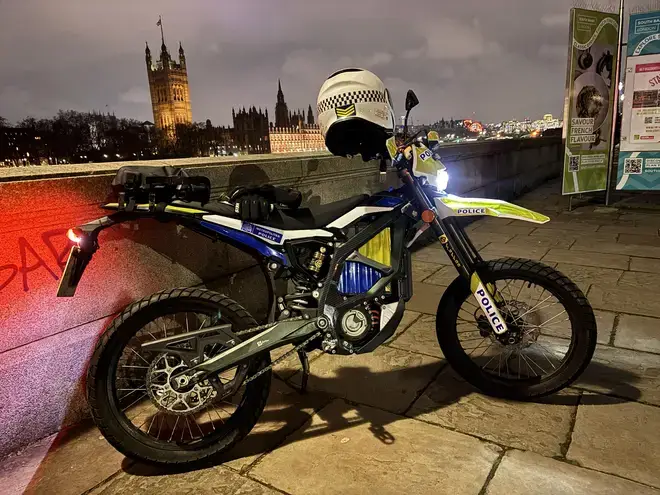
I recently met up with the Metropolitan Police Interceptors as they showed off their flashy new Sur-Ron bikes and drones, being used to chase criminals after they strike.
This is a team of specialist officers who move around to tackle serious crimes, and just now, their main focus is the plague of phone snatching in Central London.
Thousands of offences go unresolved, with victims complaining about a lack of action from police.
But what happened as I sat in the back of one of the unmarked cars – patrolling and poised to chase – showed the challenge that officers face in the minutes that follow.
We raced our way towards Marble Arch within minutes of a woman reporting her phone had been stolen from her.
The only description she could give was that he was a Black male, dressed all in black, and he was on an e-bike. But her husband’s phone was tracking him.
The officers I was with decided to call her directly as a handful of units – in cars, vans and on their own Sur-Ron e-bikes – chased after him.
The woman gave live updates to us, as we blue-lighted our way through the evening’s traffic, chasing a man on a bike that can reach speeds of 60 mph.
He was heading South and as the victim told us her phone was heading down Vauxhall Bridge Road, another team was in position to intercept him.
“He’s ditched the bike,” we heard over the radio. He’d slipped past the officers waiting for him.
We continued to get updates from the victim: “He’s outside Vauxhall Station… he’s by Lightbox nightclub,” she said desperately on the phone.
And then the ticking clock – the golden few minutes – really started to press.
“He’s turned the location off now,” she said.
The radio message went out: “The phone is off. No more tracking available.”
That was it. We were too late. We went to a nearby park where suspects are known to have ditched SIM cards or even left phones sitting when the police are onto them, so they’re not caught.
But there was no sign.
“That’s it, that’s all we can do,” the officer told me, “unless the location comes back on again or we find it after arresting someone for another snatch, we’ve done all we can.”
The suspect got away in this case, but over the past month, the Met says more than 370 arrests have been made and 770 stolen phones recovered, as part of this intensified activity.
London Mayor Sadiq Khan has also announced plans to invest another £4.5 million in a new mobile phone Command Cell, to coordinate against and target prolific offenders.
But one of the key sticking points, I’m told, is also the backlog in the criminal justice system.
Many of the offenders are on bail, the officers told me, some with more than 20 outstanding charges.
And while they wait for the courts to convict and sentence them, they’re back on the streets, wreaking havoc again and again.
