


It comes as the government explores banning social media for under-16s
Share
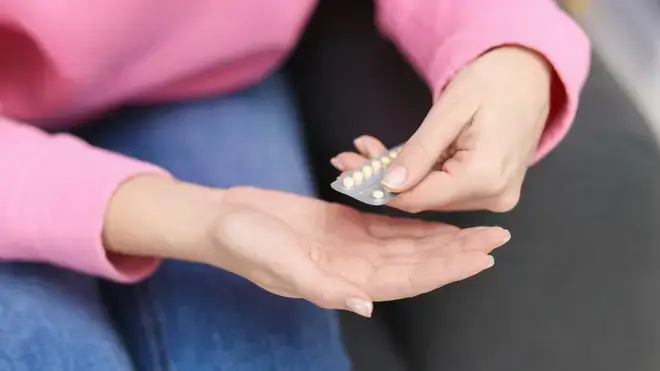
A huge drop in women taking the contraceptive pill and the recent rise in teen pregnancies has been "fuelled" by health misinformation on TikTok, a doctor and social media campaigner has warned.
Speaking to the Science and Technology Committee on Wednesday, Dr Rebecca Fuljambe, a GP from North Yorkshire, said the harm of social media is "increasing day by day".
It comes as the government explores banning social media for under-16s – after Australia imposed similar restrictions last year.
Giving evidence to MPs on the matter on Wednesday, Dr Fuljambe said she is extremely "worried" about health misinformation on social media platforms, which she said can be "really damaging" for young women.

She said this demographic has been exposed to content on TikTok telling them hormonal contraception is "going to make them fat, infertile, and cause brain tumours".
This is partially why the uptake of hormonal contraception has gone down by over 50% in the last 15 years, Dr Fuljambe said.
She added: "The women's health leaders in this country say that that has been predominantly fuelled by misinformation on TikTok telling young women that hormonal contraception is going to make them fat, infertile, and cause brain tumours.
"This is really damaging for young women. Our teenage pregnancies are back on the rise after decades of work to bring them down and we have the highest ever rates of abortions in our young women at the moment."
Data from the Office for National Statistics published last year showed a rise in teen pregnancies rise for the first time 14 years.
Meanwhile, NHS data from 2022-23 showed the proportion of women using the pill as their primary form of contraception dropped from 47% in 2012-13 to 27%.
"And this is driving inequality as well because we know that women from deprived backgrounds are three times more likely to have an abortion and 20 years less of health," Dr Fuljambe said.
However, health misinformation remains prevalent across a variety of social media platforms and not just TikTok, according to a February 2025 study.
Dr Fuljambe is also founder of Health Professionals for Safer Screens, a UK-based volunteer organisation of clinicians calling for healthier, safer screen use for children.
She warned the harm caused by social media to children is "showing no signs of decreasing" and is "frustrated" by how the platforms are “so strongly implicated in a lot of the presentations we see” in young patients.
This includes physical as well as mental health problems.
Dr Fuljambe said: "We have an obesity epidemic in children which isn't being made better by the fact so many children, especially in deprived backgrounds, are sitting for hours and hours on screens.
"So we're actually seeing that in clinical practices cases of things like an eight-year-old coming in with peripheral oedema because they hadn't moved from 12 hours gaming."
Peripheral oedema is the swelling of tissues, usually in the legs, ankles, and feet, caused by fluid buildup.
“There's various physical manifestations of children sitting still for hours and hours when they should be moving and usually they're on screens. We're seeing that a lot.
"Eyesight, myopia, short sightedness is genetic but the huge increases in rates of short sightedness, huge meta analysis have confirmed that this cannot be down to genetics alone and they've found that for every extra hour of digital screen use, the risk of developing short sightedness goes up by 20 percent,” Dr Fuljambe added.
It comes after grieving mothers whose children died after seeing harmful content online told LBC that delaying a social media ban for under-16s puts more children at risk.
They said the three-month consultation period on the potential ban risks kicking down the road and sparking further inaction.
The consultation will look at whether social media platforms should come with a minimum age requirement and whether platforms should switch off addictive features such as autoplay.
On Monday, LBC dedicated an entire day’s coverage online and on air for Online Safety Day.
Hailing LBC's coverage, Baroness Kidman told the committee: “I really just, in my last sentence to the committee, would like to just say, you know, people are desperate out there.
“Parents are desperate, kids are desperate. There were seven hours of programming at LBC on online harms on Monday, and not one person rang in and said, let it [social media] be.”
“We need to deal with this,” she added.
This week, MPs rejected the ban on social media for under-16s.
However, a ban could still come in future after the Commons supported a Government bid to give additional powers to the Secretary of State.
MPs voted 307 to 173, majority 134, against a proposed change to the Children’s Wellbeing and Schools Bill, which was brought forward by Conservative former minister Lord Nash.
The age limit had been backed by peers earlier this year after growing calls from campaigners including actor Hugh Grant.
Under the amendment in lieu, Science Secretary Liz Kendall could “restrict or ban children of certain ages from accessing social media services and chat bots”.
She could also limit children’s VPN use, restrict access to addictive features, and change the age of digital consent in the UK, education minister Olivia Bailey told MPs.
LBC has approached TikTok for comment.