
The timing of the school holidays is “bizarre”, and the summer break should be shorter so that children are not taking exams during the hottest time of the year, says the head of Ofsted
Share
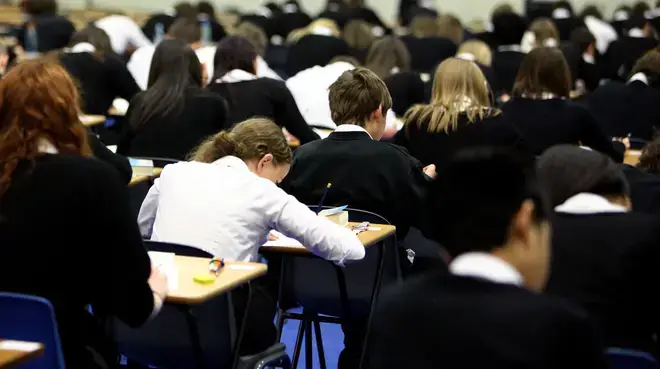
The length and timing of school summer holidays need "a good old look at" to stop children sitting exams at the hottest time of year, the head of Ofsted has advised.
Sir Martyn Oliver suggested that changes to timings could improve children’s school experience, adding it was "pretty bizarre" that the academic year was "very much determined around harvesting fields".
"It’s pretty hot usually in May, June and July, just at the point you’re asking children to sit down and take an exam," he said.
READ MORE: Ofsted chief backs UK to follow Australia in banning social media for under-16s

READ MORE: Social media ‘chipping away at attention spans’ of pupils – Ofsted chief
Most state schools in England have a six-week summer break, two-week breaks over Christmas and Easter, and a one-week half-term holiday in each of the three terms. Some schools offer a longer two-week break in October.
Oliver, who assumed his role in January 2024, told the Financial Times that children were physically in school for a “ridiculously low percentage” of the year. Citing the 32.5-hour school week, he said that “precious” time should be used for studying and socialising.
In February last year, he questioned why children were in school for only 190 of 365 days.
He said the six-week summer holiday could cause “dysregulation” in pupils who slipped out of their routines and discipline, particularly those who were vulnerable or disadvantaged.
Oliver also said he was concerned about the “stubborn” gap between advantaged and disadvantaged children, with access to mobile phones in school hours exacerbating the divide.
Last month, the watchdog chief said he would have consulted on a social media ban for under-16s sooner, after the UK government announced it was considering such a ban.
The policy is already in force in Australia and looks set to be adopted by France and Spain.
Oliver also told the FT that children needed help from their parents and teachers “to learn the necessary patience to fail, to improve”.
He contrasted the “enjoyable difficulty” of studying with the “instant gratification” provided by technology, saying it was “ludicrous” to suggest children needed a screen to learn.