
Share
An undersea defence expert has warned the West must urgently rethink how it protects the world’s most important shipping lanes as fears grow that Iran is attempting to mine the Strait of Hormuz.
Speaking exclusively to LBC, Verineia Codrean, an undersea defence specialist at the defence technology firm EUROATLAS, said the threat beneath the waves is being dangerously underestimated.
Her warning comes as tensions in the Middle East continue to push global energy markets into turmoil.
Prime Minister Keir Starmer has said the Government will “step in” if companies exploit rising heating oil prices following Iranian retaliation against US and Israeli strikes, which has sent energy costs soaring and rattled global markets.
But Codrean said the strategic danger lies far beyond oil prices.

“While the US claims to have destroyed over a dozen mine-laying ships, CNN has reported that ships have already begun the process of rigging the Strait of Hormuz with explosives,” she said.
“Iran has extensive capabilities when it comes to an operation like this, even having taken the losses that it has. The crucial role the Strait of Hormuz plays has allowed the IRGC to effectively hold the West hostage.”
The Strait of Hormuz is one of the most critical chokepoints in global trade, through which roughly a fifth of the world’s oil passes every day.
Any disruption there quickly reverberates through global markets.
Oil prices surged above 100 dollars per barrel earlier this week as fears grew that the conflict between Iran, Israel and the United States could spiral into a wider regional war.
On Wednesday, the International Energy Agency said it would release 400 million barrels of oil onto global markets, including 13.5 million from the UK, in an attempt to stabilise supply.
Meanwhile the United States Central Command said US forces had destroyed multiple Iranian naval vessels, including 16 ships believed to be capable of laying mines near the strait.
But Codrean warned naval ships alone cannot neutralise every threat beneath the surface.
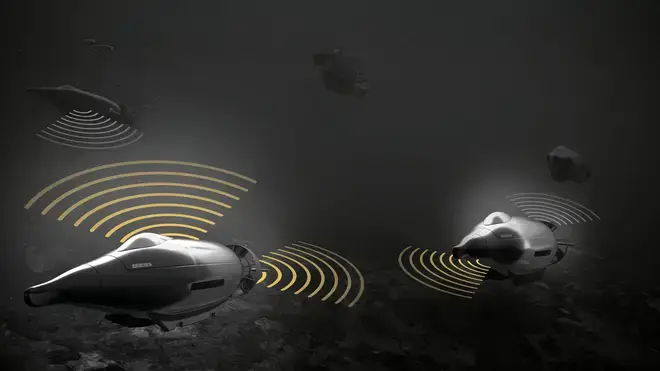
“That’s before you take into account the threat posed by underwater unmanned vehicles, a newer frontier when it comes to war at sea,” she said.
“We’ve seen these deployed in the Red Sea by the Houthis, an Iran proxy, for the express purpose of disrupting international shipping, a similar circumstance to the one we are facing now.”
The use of underwater drones and improvised sea mines is increasingly seen by defence planners as one of the most disruptive and difficult threats to counter.
Unlike conventional naval combat, attacks below the surface can remain hidden for long periods and are extremely difficult to detect or neutralise.
Codrean said governments have been slow to recognise just how exposed critical infrastructure beneath the sea has become.
“While countries have pledged naval vessels to defend ships travelling through the Strait, those ships can only do so much against undersea threats like mines or drones,” she said.
“In a similar way to how militaries around the world have woken up to the enormous threat posed by aerial drones, responding by investing heavily in air defence technology, those same militaries need to wake up to the same threat coming from under the water.”
Her warning goes beyond the immediate crisis in the Gulf.
Beneath the oceans lie the cables that power the modern world, carrying financial data, telecommunications and internet traffic between continents.
Codrean said sabotage or attacks on this infrastructure could have catastrophic consequences.
“From my time working in this area it’s become increasingly clear to me how vulnerable we are beneath the surface of the ocean,” she said.
“From mines in our vital shipping lanes to attempts to cut the cables that provide us with energy and telecoms, sabotage would cause catastrophic disruption to digital financial transactions and the world as a whole.”
“This can’t just be a case of out of sight, out of mind. Undersea defence needs to be urgently prioritised.”