

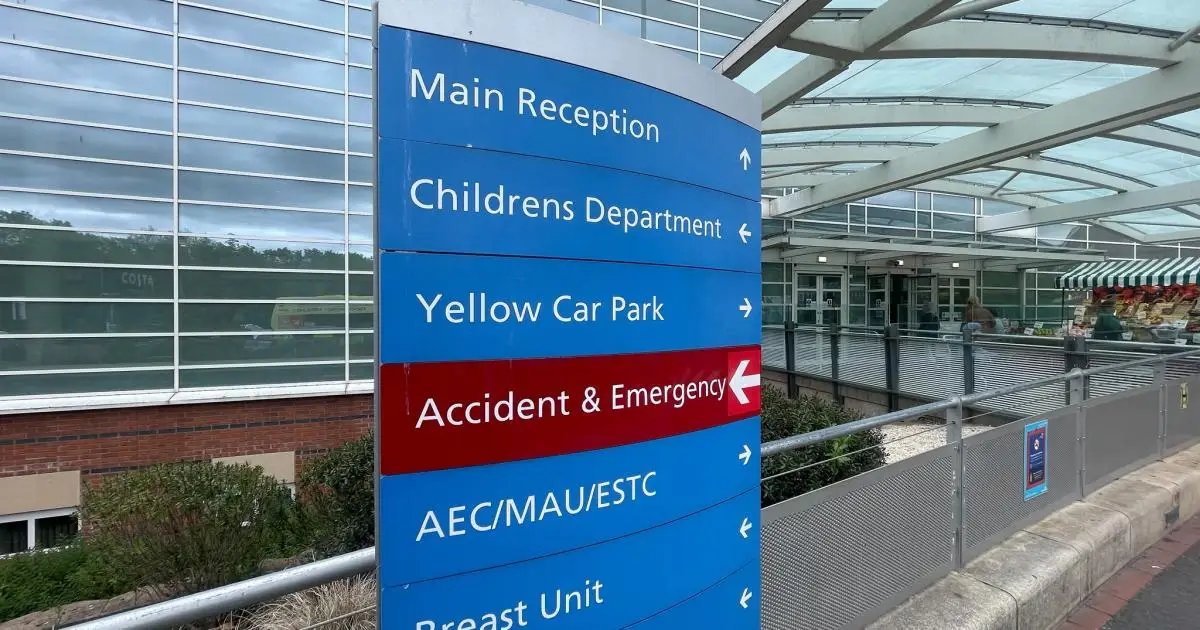

A fifth heatwave is putting hospitals under increasing pressure, but health bosses say they have not yet been forced to divert ambulances away from the city’s emergency department.
High temperatures have placed strain on hospitals across the country, including Worcestershire Royal Hospital in Worcester, as figures show the toll of two heatwaves last month and a fifth this month. Dehydration and falls are among the causes of a spike in admissions.
On Wednesday, Worcestershire, which is now under drought conditions, was under an amber extreme heat warning between 9am and midnight.
The sun and heat can have immediate effects like sunburn but also exacerbate health conditions, putting pressure on Worcester hospital and the West Midlands Ambulance Service.
Impact of amber heat alert on Worcester hospital
A spokesperson for Worcestershire Acute Hospitals NHS Trust said: “We are seeing increased cases of patients attending our hospitals with dehydration, as well as suffering falls associated with this.

“While anyone can be affected by hot weather, those who are vulnerable are at even greater risk of becoming unwell, including older people, babies and young children, pregnant women, and those with underlying health conditions.
“We would encourage people to follow existing public health advice for staying safe in the hot weather, as well as checking on family, friends and neighbours who may be at higher risk of becoming unwell.
Increase in 999 calls in heatwave
The ambulance service has experienced increasing demand during the heatwave. For example, there were 4,743 calls on Wednesday (August 12) compared to 4,486 calls on the same date the previous year. On Monday (August 10), the contrast was even more pronounced with 4,684 calls compared to 3,998 on the same day the previous year.
PRESSURES: Ambulances outside Worcestershire Royal Hospital as heatwave figures are released (Image: Newsquest)
A spokesperson for the West Midlands Ambulance Service said: “The ambulance service typically sees an increase in demand during periods of excessive heat. This is not necessarily due to heat-related illnesses such as sunburn, but because hot weather can exacerbate existing health conditions and increase the risk of dehydration, particularly among older and more vulnerable people.
“Our staff continue to work incredibly hard to respond to patients during periods of increased demand and we thank them for their continued efforts. We would also ask the public to use 999 wisely and, where appropriate, consider whether other NHS services or sources of medical advice may be more suitable for their needs.”
No ambulance diverts despite pressures
However, bosses at Worcestershire Acute Hospitals NHS Trust, say they have not had to divert ambulances away from Worcester’s emergency department to the Alexandra Hospital in Redditch despite acknowledging the increasing pressure.
More details revealed after air ambulance called to two-car crash in village
400,000 A&E visits for minor eye conditions could be avoided, research reveals
Critical review after increase in baby deaths at Worcestershire Royal Hospital
A trust spokesperson said: “Our Emergency Departments have been, and remain, extremely busy.
“Where one of our sites is significantly busier than the other we do sometimes work in partnership with our colleagues in the ambulance service to enable crews to go to the site where they can hand over patients in the most timely way, where that is safe and clinically appropriate.
“We are grateful for the continuing support of WMAS colleagues.”
The trust says that while ‘divert’ is not currently in place, it remains an option should one site become significantly busier than the other.
A spokesperson for West Midlands Ambulance Service added: “There may be occasions when ambulance crews are directed to an alternative hospital site where this is safe and clinically appropriate, based on the pressures and capacity at each Emergency Department.”
National summer surge in demand
The pressure on hospitals comes amid a national “summer surge” in demand, with NHS England reporting more than 3,000 patients a day receiving care in corridors or makeshift areas for the second consecutive month.
Last month saw record levels of A&E attendances across England, with 2.5 million visits recorded during two heatwaves.
Health Secretary Yvette Cooper has said the NHS must begin planning for summer pressures in the same way it does for winter.
An average of 2,300 patients in England received corridor care in A&E departments each day in July, alongside 728 patients elsewhere in hospital wards.
This totals 3,028 patients per day, a slight decrease from June’s figure of 3,188.
The corridor care data, published for the third time by NHS England, refers to patients who have been waiting in corridors or temporary spaces for at least 45 minutes.