

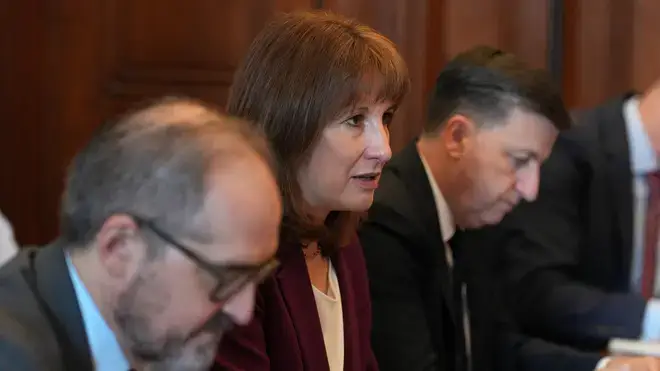

The Chancellor said she would give support “to those who really need it”, with a package of help for people who rely on heating oil – which is not covered by the energy price cap – expected next week
Share
Targeted support could be offered to households struggling with soaring energy bills as a result of the Middle East crisis, Rachel Reeves has indicated.
The Chancellor said she would give support “to those who really need it”, with a package of help for people who rely on heating oil – which is not covered by the energy price cap – expected next week.
Gas and electricity bills are covered by regulator Ofgem’s price cap, which is fixed until June, but if the conflict continues and Iran maintains its stranglehold on shipping in the Strait of Hormuz, then, households could face dramatic hikes at that point.
But about 1.5 million households relying on heating oil already face soaring costs, with the price per litre doubling since the start of the crisis.

Ms Reeves indicated a subsidy package would be set out next week: “I have found the money and we’ve worked through with MPs and others a response for people who are not protected by the energy price cap.
“We’re giving greater support to those who really need it," she told The Times.
There is more time to draw up a plan for gas and electricity bills, because of the price cap.
Analysts at Cornwall Insight have forecast that household energy bills could rise by 10 per cent from July following sharp increases in wholesale gas prices.
This would mean Ofgem’s price cap for July to September surges to £1,801 a year for a typical dual fuel household – an increase of £160 or 10 per cent on April’s cap.
“We’ve got some time, and we are working through in the Iran response board (a group of Treasury ministers and officials) different approaches that we could take, including looking at more targeted options,” the Chancellor said.
“We are working through different scenarios at the moment and I don’t want to suggest that we’re going to do something that we know we’re not able to deliver.
“I am concerned given how high our debt is, the debt that we inherited, and so I want to look at what the different options available would be.”
She played down the prospect of a blanket energy bailout for households, as happened in the wake of Russia’s invasion of Ukraine at the cost of about £35 billion over a six-month period.
“It is important even when there is an economic shock — or perhaps particularly when there’s an economic shock — that you continue to be disciplined about your use of public money,” she said.
The Strait of Hormuz, a vital route for oil and gas tankers, usually sees 138 ships a day pass through but that has declined to about five due to the threat of attack.
The threat to global supplies has led to volatility in oil and gas prices, feeding through to the higher fuel bills and the risk of increased household energy costs.
A Government spokesman said: “We know that people are concerned about the potential impact of global conflicts on the cost of living.
“While it is too soon to know the full impact of this crisis, as the Chancellor said, she will take the necessary decisions to help families with the cost of living and protect the public finances.
“We have extended the 5p fuel duty cut, expanded the Warm Homes Discount to take £150 a year off of energy bills for six million households and the energy price cap will protect households for the next three months as bills will fall by £117”.
Tory leader Kemi Badenoch called for the Chancellor to scrap September’s “stupid” planned increase in fuel duty, which she said was “the last thing we need”, and demanded the UK should “start drilling” in the North Sea.
