

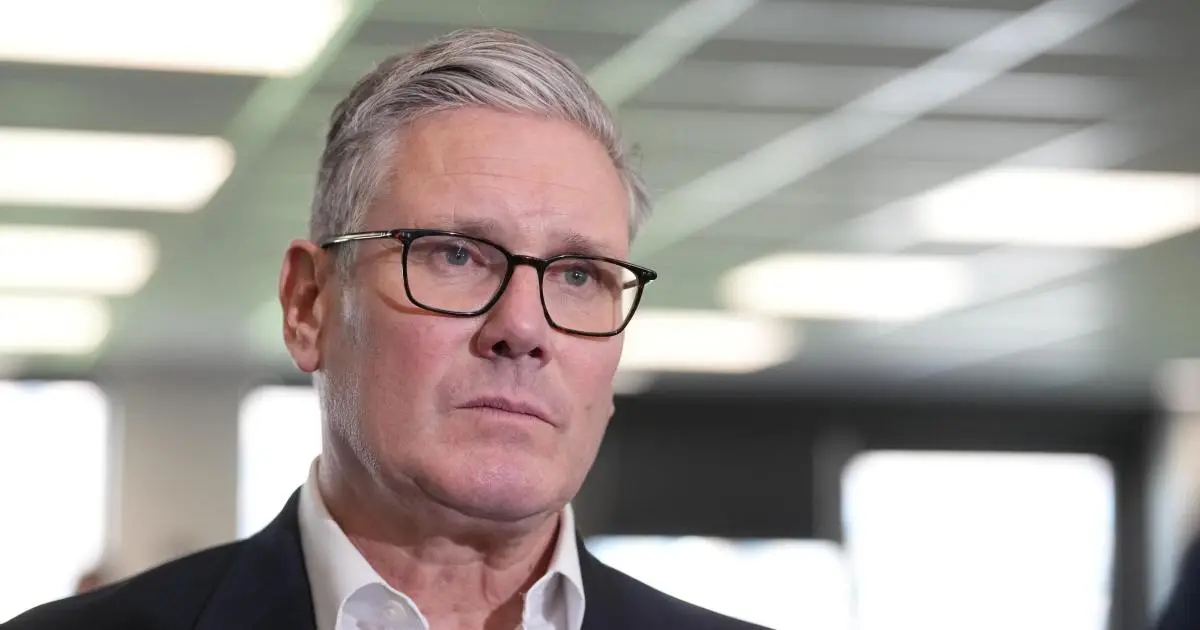

Sir Keir Starmer is fighting to keep his position as a Labour MP threatened to mount a leadership challenge unless the Cabinet moved to oust him.
The Prime Minister will use an address on Monday and the King’s Speech on Wednesday to mount a fightback after growing numbers of Labour MPs demanded a change at the top of the party.
Sir Keir said his administration needed to be better at offering hope to people and promised to be clearer about “the values and convictions that drive me”.
But in a sign of the frustration within the party, former minister Catherine West said she would launch an unlikely leadership challenge on Monday in an attempt to force the Cabinet to act to remove Sir Keir.
She told the BBC’s PM programme: “I’m putting people on notice – if I don’t hear by Monday morning of some leadership hopefuls, I will be asking everybody in the Parliamentary Labour Party to put a name against my name, because we need to get this ball rolling.

“But my preferred option is for the Cabinet to do a reshuffle within itself, where there’s plenty of talent and for Keir to be given a different role, which he might enjoy, perhaps an international role, and then for others to come to the fore, who can communicate the message, who are very able, so we can have minimum fuss.”
She claimed to have the backing of 10 MPs for her initiative, well short of the 81 – 20% of Labour MPs – needed to mount a challenge, but her move is intended to spur one of the potential Cabinet leadership hopefuls into action.
Sir Keir has been hammered by the twin threats of Reform UK on the right, with Nigel Farage’s party making spectacular gains, and the Green Party on the left making inroads in Labour’s urban strongholds.
In England, councils which had been Labour for generations in the North were lost, while the party’s grip on London has also been severely weakened.
Results on Saturday underlined the challenge facing Labour, with Reform taking control in Barnsley and ending Labour’s hopes of retaining Bradford while a Green surge saw Sir Keir’s party losing control in Lambeth for the first time in 20 years.
In Wales, having been in government with half the seats in the Senedd at the last election, the party was reduced to just nine of the 96 seats available in the newly enlarged legislature, with First Minister Baroness Eluned Morgan the highest-profile casualty.
Sir Keir insisted he would not “walk away” from his job, claiming it would “plunge the country into chaos” if he quit.
“But that doesn’t mean we don’t need to respond, it doesn’t mean we don’t need to rebuild,” he said.
“It doesn’t mean that we don’t need to set out the path ahead.
“That’s what I’m going to do in the coming days.”
He said one of the “unnecessary mistakes” made by his Government was setting out the financial and international challenges facing the country, but not telling people how their lives would improve.
Sir Keir said: “The hope wasn’t there enough in the first two years of this government.”
Around 30 Labour backbenchers have publicly suggested Sir Keir should either quit or set a timetable for his departure.
But deputy Labour leader Lucy Powell told BBC Radio 4’s Today programme: “Thinking that setting out some kind of timetable would put to bed the issues of leadership, I think is actually the wrong conclusion here.
“Because all that would do is fire the starting gun of a, quite honestly, very distracting and ongoing debate about leadership.”
While many of Sir Keir’s critics have been those on the left of the party who were never his natural supporters, the scale of the defeats has prompted more moderate voices to demand change.
Ms West was in Sir Keir’s government and Clive Betts, the party’s joint longest-serving MP, also said the Cabinet should make it clear to the Prime Minister he has to go “in the not too distant future”.
He told the Today programme: “I think there’s now a responsibility on the Cabinet to talk to Keir and to recognise, as they obviously are picking up on the doorstep, that this can’t carry on forever.”
Health Secretary Wes Streeting, who has continued to attract speculation about his ambitions despite publicly denying plans for a leadership tilt, said the Prime Minister will “have my support” in setting out how the Government will move forward on Monday.
But facing questions from reporters late on Friday night as he attended the count for Redbridge Council, where Labour clung on to power, he declined to say whether he believed Sir Keir was the right person to lead the party into the next general election.
Former deputy leader Angela Rayner, widely viewed as a potential challenger for the leadership, has not yet commented on the results.
Nor has Greater Manchester Mayor Andy Burnham, whose path back to Westminster has previously been blocked by Labour’s ruling national executive committee.
Ms Powell, a Manchester MP, said Mr Burnham was “very popular and he’s a great asset to the Labour Party” and “I want to see us using all of the talents that we have”.
But she added: “I don’t want to see a leadership challenge, that’s not how we operate in the Labour Party.”
In the aftermath of the elections:
– Sir Keir gave former prime minister Gordon Brown a role as special envoy on global finance and made Baroness Harriet Harman his adviser on women and girls.
– Scottish First Minister John Swinney said his SNP will engage with other parties to ensure Reform UK, which came joint second, is “locked out” of government at Holyrood. He said the prospect of Mr Farage becoming prime minister in Downing Street showed “the need for independence is so urgent”.
– Plaid Cymru’s Rhun ap Iorwerth said he intends to form a minority government in the Senedd.
– After 132 of 136 English councils had declared results, Labour had a net loss of 34 authorities and 1,117 seats.
– Reform had gained 14 councils and 1,320 seats.
– The Green Party had gained control of four councils and put on 337 councillors.
– The Liberal Democrats had gained three councils and 143 seats while the Tories had a net loss of eight authorities and 433 councillors.