


It was not “reasonably foreseeable” that someone would access the entrance to a culvert in which Noah Donohoe’s body was found, a senior Stormont official has told an inquest.
Jonathan McKee from the Department for Infrastructure (DfI) said he had never encountered another death which had occurred in the same circumstances as that of the Belfast schoolboy.
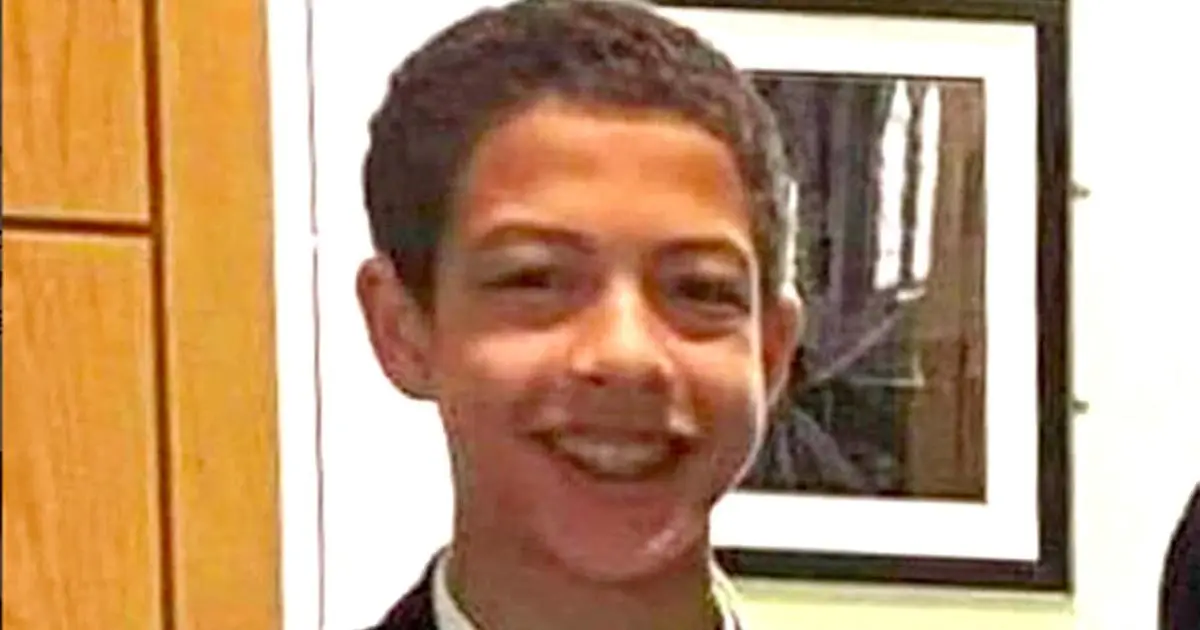
Noah, a pupil at St Malachy’s College, was 14 when his naked body was found in an underground water tunnel in north Belfast on June 27 2020, six days after he left home on his bike to meet two friends in the Cavehill area of the city.
He was found more than 600 metres downstream from where he had last been seen close to the culvert inlet behind houses at Northwood Road in north Belfast.
A post-mortem examination found the likely cause of death was drowning.
The long-running inquest, which is in its 15th week, heard further evidence from DfI official Mr McKee on Wednesday.
He was questioned by Neasa Murnaghan KC, barrister for the DfI, about whether it would have been possible to erect a fence between four houses on Northwood Road and the area of land where the culvert is located.
Mr McKee said that would have been potentially “cutting off access” for those homeowners to an area of land which was not owned by the department.
Ms Murnaghan asked it if was “reasonably foreseeable a trespasser would have accessed” the area.
Mr McKee said: “I don’t believe so. It is not a publicly accessible piece of land, it is bounded by security fencing and a locked gate across its boundaries.
“There are hedging and fencing at one of the other boundaries and then there are four residential properties on the other boundary.
“I have been on this piece of land quite a few times and it is certainly a vigilant community.
“You don’t feel you have the right to be there, you feel you are on someone’s property.
“The only reason I am able to go on is the legal powers associated with the department undertaking their responsibilities, you can be on private land.
“It wouldn’t have been, in my view, an area of land where it would have been foreseeable for someone to come on to the houses, enter into their gardens and then cross over that boundary fence or through a gate into this area of land.”
The barrister asked the witness about options the department could have taken to reduce risks of access to the culvert.
He said: “It is not always possible to manage the risk associated with infrastructure down to zero.
“Guidance is the tool to balance the risks that exist.
“Fencing wasn’t a practicable option.”
The witness said there were a number of deterrents, including the barred debris screen over the entrance to the culvert.
He said: “I myself wondered could I get through the debris screen. I tried to do that and I couldn’t.”
Ms Murnaghan asked: “In all of your experience have you ever come across a death which has arisen in these circumstances.”
Mr McKee responded: “No.”
The witness said there could be “significant waterflows” within the culvert.
He said: “The stream is idyllic many days of the year but there are times during storms when the water level would rise significantly and pose a real significant threat of entrapment.
“Just because flooding does not occur very often doesn’t mean the risk is low.”
After lunch, Ms Murnaghan said the jury had heard claims earlier in the inquest that when the culvert was refurbished in 2017, with new steps constructed, it had improved public access to the site.
Mr McKee said: “It doesn’t change the public accessibility in terms of the overall site and the location.
“It doesn’t change the fencing and it doesn’t change the gates and it doesn’t change all of the other mitigation factors that are around the site that would prevent access, or deter access to the culvert.”
The witness was asked about the replacement of the debris screen at the culvert in 2017 by the department.
He said it was a “like-for-like replacement”.
The inquest will resume on Thursday.
