

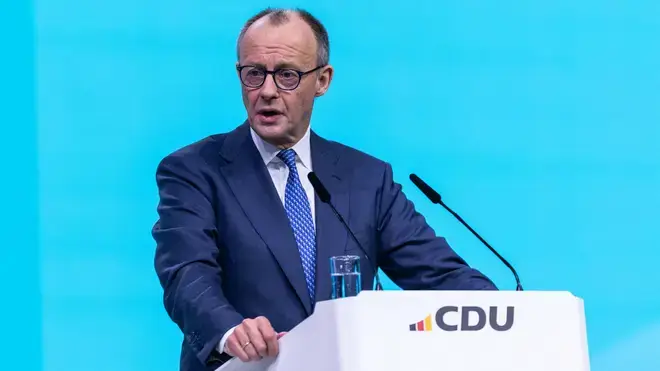

It is estimated that sickness costs German employers €82bn (£71bn) every year
Share
German Chancellor Friedrich Merz hopes to ban workers from calling in sick in a bid to tackle the country's soaring rate of workplace absence.
Mr Merz has long believed the issue is harming Germany's economy after it was revealed its population takes an average of 15 sick days per year.
Employees are able to get signed off for five days on full pay with just a phone call to a doctor’s office, which has been in place since the start of the Covid pandemic.
The Chancellor’s Christian Democrats (CDU) party now voted unanimously to end the practice at its party conference.

If the CDU's new proposals are approved, employees will have to visit a doctor in person before being declared unfit to work.
The party have claimed workers were more likely to take "the edge-of-the-bed-decision in favour of calling in sick" if getting a sick note was easy.
The country also allows up to 41 days off covered by employers before insurers start paying, with the Institute for the Economy (IW) estimating that sickness costs German employers €82bn (£71bn) every year.
Mr Merz's comments in January caused controversy when he said: “We must all achieve a higher level of economic output together than we are currently achieving."
He also questioned then if so many sick days were really necessary as Health Minister Nina Warken announced a critical review of the current policy.
The boss of Allianz insurance recently warned the country is at risk of once again becoming the "sick man of Europe."
Ola Kallenius, the Mercedes-Benz chairman, said: "When absenteeism in Germany is sometimes twice as high as in other European countries, this has consequences for business."
However, Yasmin Fahimi, leader of the German Trade Union Confederation, called it "highly indecent to place employees who have called in sick under general suspicion, as if they were shirkers and slackers."
In comparison to Germany's 15 average sick days a year, Britain averaged 4.4 days off work in 2024.
