

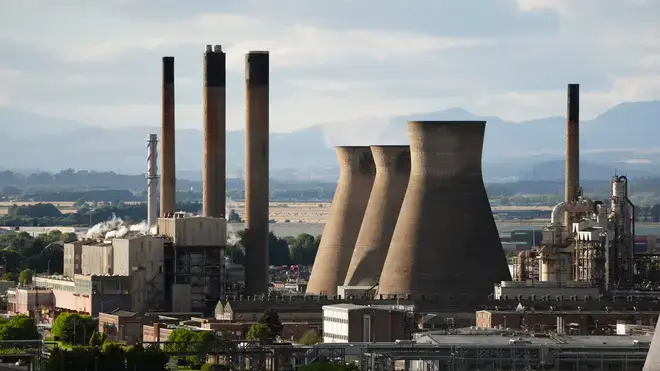

The report shows soaring gas prices cost Scottish households an additional £5.8 billion between 2021-24.
New figures show the recent spike in energy prices cost Scotland’s economy £11 billion, leading to renewed calls for the country to end its “dependence on international fossil fuels”.
A new report by the Energy & Climate Intelligence Unit (ECIU) calculated the direct additional costs faced by businesses, households and other “energy consumers” between 2021 and 2024 as a result of the energy crisis.
This saw wholesale gas prices soar in the wake of Russia’s invasion of Ukraine, while the price of road fuel rose due to a spike in oil prices.
The analysis shows the crisis cost Scottish households an additional £5.8 billion in excess energy costs, which the ECIU said equates to around £2,260 per household, or 70% of a typical Scot’s annual spend on food and non-alcoholic drinks.

Those in areas with the lowest average household incomes were also found to have spent a greater proportion of their income on energy on excess energy costs than people in richer areas.
Industry faced additional costs of £1.8 billion, with Glasgow (£800 million), Edinburgh (£740 million), the Highlands and Islands (£560 million) and Aberdeen (£390 million) seeing the biggest spikes.
Meanwhile the commercial, agricultural and public sector organisations had to absorb an extra £2.6 billion.
The remaining £0.8 billion related to non-domestic road fuels.
The ECIU said the findings expose Scotland’s “deep vulnerability to global oil and gas markets”, adding that many energy-intensive industries continue to face high industrial energy costs.
It pointed to a recent report showing the UK has some of the highest energy costs in Europe, largely because of its relative dependence on gas.
It also flagged previous IMF analysis suggesting the UK’s dependence on imported fossil fuels left it the worst-hit economy in western Europe by the spike in prices which followed the Russian invasion of Ukraine.
The report stated: “Our findings show a significant burden placed on Scottish consumers during the crisis, highlighting the risks for all energy consumers of reliance on volatile fossil fuel markets.”
It added: “While there has been some progress made on reducing demand for gas through building more renewables during the crisis, progress on shifting away from gas boilers for heating and reducing dependence on oil and gas in the industrial sector remains slow.
“In an increasingly uncertain world, this raises questions about whether Scotland is prepared for another crisis.”
Professor Tavis Potts, co-coordinator at the Just Transition Lab at the University of Aberdeen, said: “Anybody who has paid a gas bill over the past few years – businesses and families alike – has felt the impacts of Scotland’s reliance on oil and gas.
“Drilling for more North Sea gas won’t fix this underlying problem or lower bill costs for consumers or industry as output is too low to influence prices that are set in global markets.
“With most of the North Sea gas resource having been extracted, future marginal finds could only supply a fraction of the UK’s future demand – and it won’t make any difference to bills with increasing reliance on imports.
“To shield energy consumers from future energy price shocks in an increasingly uncertain world, lowering demand through renewables and other net zero technologies is key.
“Wind power cut UK wholesale day-head prices by a third last year and with recent offshore wind auctions delivering at scale, this effect is set to increase.”
Mercedes Villalba, Labour MSP for the North East of Scotland, described the findings as “damning”.
“They reveal the immense cost of our continued dependence on international fossil fuels for households across Scotland,” she said.
“What’s more, the ECIU makes clear that working-class communities bear the brunt of our government’s failure to accelerate a just energy generation.”
Minister for Energy Consumers Martin McCluskey said: “This report shows exactly why we need to push ahead with our clean power mission to bring down the cost of energy and guarantee home grown, clean power for our country.
“We have secured enough homegrown clean energy in our recent auction to power the equivalent of 16 million homes, protecting households from future price shocks.
“Alongside that, our Warm Homes Plan – backed by £15 billion of funding – will cut the cost of heating homes in Scotland, making homes warmer, bills lower, and our energy system more secure.”
The Scottish Government’s Energy Secretary Gillian Martin said: “Fundamentally, energy prices remain high compared to pre-2022 levels, and despite UK Government promises to bring them down.
“Scotland is an energy rich nation but shamefully, 31% of our population are in fuel poverty. We must have the full powers of independence to make our energy wealth work for our people.
“In the meantime, we have worked with stakeholders to develop a social tariff in the form of an automatic and targeted discount on energy bills to address unaffordable bills at source, which the UK Government must urgently adopt. Under our proposals, which have cross sector support, 660,000 households in Scotland would see their estimated fuel bills go down by an average of £700.
“Until that happens, we will continue to do all that we can within our powers to tackle fuel poverty and support households that are struggling, particularly in rural communities.”
She added: “We are investing £300 million this year into improving the heating and energy efficiency of our homes and buildings.
“And this winter we will invest over £197 million in our Winter Heating Benefits, with more than 1.5 million payments already made to help households with their energy bills this winter.”
