


The Scottish Tories have pledged to overhaul rates and reverse what they described as ‘damaging cliff-edge’ tax rises facing firms.
Russell Findlay has promised to cut taxes permanently for businesses in Scotland if his party wins the Holyrood election.
The Scottish Conservative leader pledged to overhaul business rates and reverse what his party described as “damaging cliff-edge” tax rises set for this April.
Under his plans, properties valued under £20,000 would pay no tax at all.
For higher-valued premises, businesses would pay tax only above the £20,000 threshold, with the same principle applied each time a property enters a higher tax band.

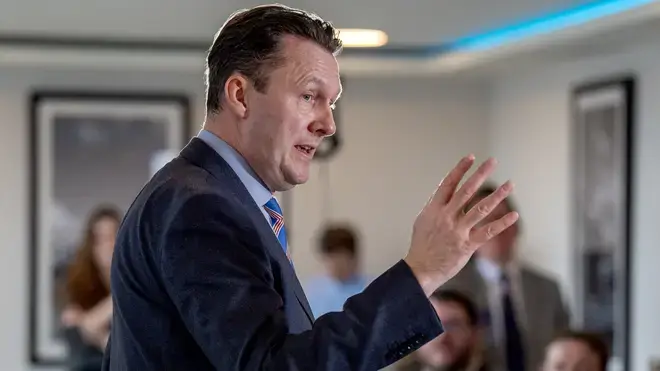
Speaking ahead of a Confederation of British Industry roundtable event in Edinburgh, Mr Findlay said Scottish businesses were over-taxed and that he was committed to growing the country’s economy and creating more jobs.
The Scottish Conservative manifesto has pledged to end “extreme” business rates by capping the maximum rise that can happen each cycle.
It comes as the Scottish Retail Consortium (SRC) warned that medium and larger shops in Scotland will pay £162 million more than their English counterparts over the next three years.
The Tories have also promised to introduce a new Bill in partnership with businesses that would allow them to apply for regulations to be scrapped or amended, with a final decision resting with ministers.
The party also wants to establish Canary Wharf-style enterprise zones where councils or ministers could streamline planning rules, provide tax breaks and acquire land to invest in declining parts of the country.
We would guarantee that Scotland has the lowest business rates in the UK.
Vote for the Scottish Conservatives using your peach party vote on May 7 to stop an SNP majority and get the focus on growing Scotland’s economy. pic.twitter.com/1JcGydsF2J
— Scottish Conservatives (@ScotTories) March 29, 2026
The Conservative manifesto will also commit to using Apprenticeship Levy funding paid by businesses to set up a new fund that would increase support for apprenticeships and be demand-led.
Mr Findlay said: “As the party of business, the Scottish Conservatives are committed to creating a positive environment for firms to thrive – which would create jobs and increase prosperity.
“Scottish businesses and workers are being relentlessly hammered by SNP and Labour taxes.
“My party would fundamentally overhaul Scotland’s business rates system to make them fair and transparent.
“We’d also work with business to cut costly red tape and ensure that apprenticeships are properly funded after being short-changed by the SNP.
“An SNP majority would be a disaster for Scotland’s economy, but voters can stop this nightmare scenario by backing the Scottish Conservatives on their peach ballot paper.”
The SRC has also been campaigning for reforms to the way businesses in Scotland are taxed.
The industry body welcomed the Scottish Government’s rates relief for smaller retail, hospitality and leisure firms but said it was still lower than the levels seen in England, where they are uncapped.
And it said there was no such relief for the more than 2,000 premises in Scotland with a rateable value of more than £100,000.
These shops will pay the higher rate of 54.8p in the pound from April 1 – far above the 43p rate in England. The SRC said Scots firms were paying £54 million a year more than those down south, or £162 million over the three-year rates period.
David Lonsdale, director of the SRC, said: “As it stands, Scotland risks becoming a materially less competitive place to operate shops and our fear is this could see a shift in investment down south.
“Continued investment in stores is essential to keep them viable and attractive to customers and to minimise the number of shuttered shops.
“It is not in the interests of Scotland’s economy for shop owners to be incentivised to invest in Berwick-upon-Tweed over Bothwell, Buckhaven, or Blairgowrie.
“A far more ambitious approach is required from those political parties seeking to form the next Scottish Government, one that at the very least ensures a competitive level playing field with England and which delivers on the industry’s vision to make Scotland the best place in the UK to grow a retail business.”
Calum Kerr, SNP candidate for Midlothian South, Tweeddale & Lauderdale, said: “John Swinney’s strong leadership is firmly on the side of Scottish business – with Labour’s hike to employer’s national insurance and rising energy bills ruining jobs, our range of rates reliefs is a lifeline for many.
“We’ve lifted 100,000 businesses out of rates, GDP figures show we outperformed the UK, Scotland has the highest levels of foreign direct investment outside of London and two global credit rating agencies have given Scotland a high investment grade – that’s what you get with an SNP government on Scotland’s side.
“Russell Findlay backed Liz Truss every step of the way as she wrecked the economy while the Tories’ disastrous Brexit has hammered Scottish business – that’s the reality of Westminster and, through a fresh start with independence, we can escape that broken system for good.”
Scottish Liberal Democrat finance and economy spokesperson Jamie Greene MSP said: “The Tories like to talk the big talk on business, but when it comes down to it, the Lib Dems actually get stuff done for Scotland’s hard-pressed SMEs.
“When they had the chance to ease the pressures felt by businesses because of crushing rates rises, the Scottish Tories simply shouted from the sidelines.
“They never had a seat at the negotiating table because they choose to play party politics over pragmatism.
“By contrast, I used those budget negotiations as leverage to squeeze the SNP for every penny I could and, as a result, secured £178 million in rates relief for pubs, clubs, restaurants, hotels and self-caterers.
“The Tories got nothing, they didn’t even try.
“If you want more Scottish Liberal Democrat MSPs who will fight tooth and nail to get stuff done, you should back us on your peach, regional ballot paper in May.”