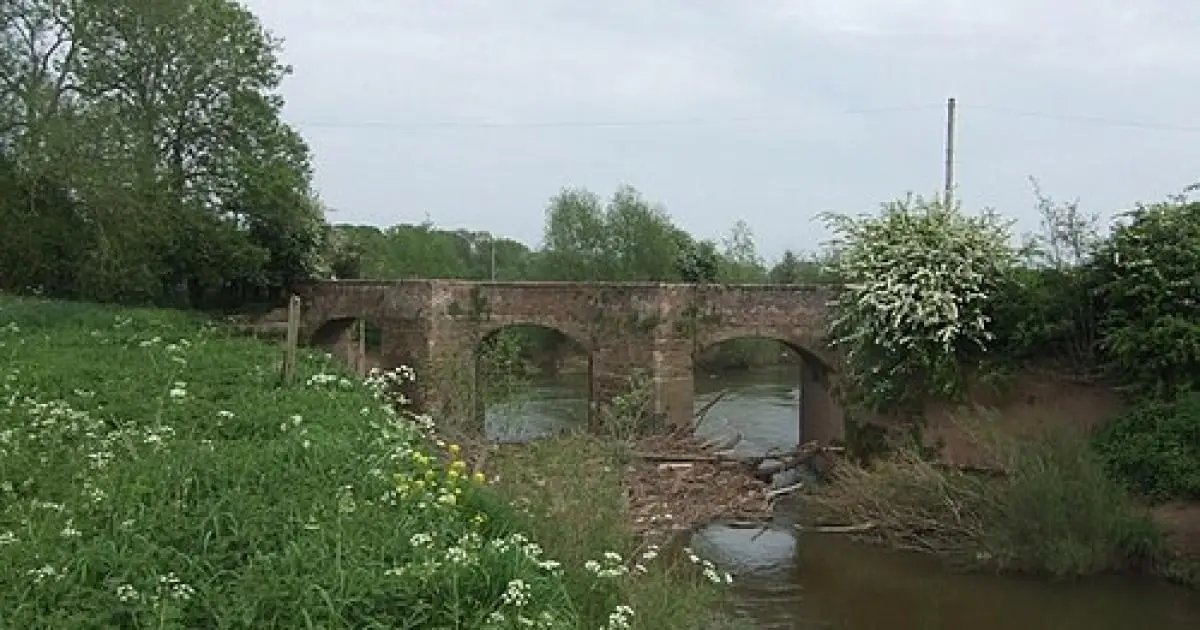

Archaeological investigations have uncovered centuries-old artefacts at a bridge in Worcestershire.
The finds were revealed during works at Powick Old Bridge, where a rare copper alloy signet ring from the late 15th or 16th century, a lead musket shot and a Queen Victoria ha’penny have been unearthed.
The excavations are part of the restoration of the Grade I listed bridge, closed since a partial collapse in 2023.
Councillor Tom Wells, Worcestershire County Council’s Cabinet Member with Responsibility for Highways and Transport, said: “These discoveries remind us that Powick Old Bridge is far more than a piece of infrastructure.
“It is a nationally important historic structure that has witnessed centuries of local and national history.

“The archaeological investigations have uncovered remarkable artefacts that help tell the story of the people who crossed, worked and lived around the bridge over hundreds of years.
“It’s fascinating to think that items lost centuries ago are now being rediscovered as part of the bridge’s restoration.”
The signet ring, discovered in river silts just downstream of the bridge, is believed to have been worn by a merchant.
READ MORE: Five cosy Worcester cafés perfect for a hot drink this autumn
READ MORE: How to book best slot for city Christmas tree festival you now have to pay for
A cygnet ring (Image: Worcestershire County Council)
Engraved with a reversed letter “R”, it would have been used to seal letters and documents, offering a glimpse into Powick’s commercial history.
The lead musket shot, showing signs of impact, is particularly noteworthy given the bridge’s links to the English Civil War.
An impacted musket shot (Image: Worcestershire County Council)
The skirmish at Powick Bridge in 1642 and the nearby Battle of Worcester in 1651 marked significant moments in the conflict, though it is not confirmed whether the shot is directly related.
A Queen Victoria ha’penny from 1899 was found in the bridge’s downstream parapet wall and is thought to date from early 20th-century rebuilding efforts.
A ha’penny featuring Queen Victoria (Image: Worcestershire County Council)
The discoveries are part of a broader project to restore the bridge while preserving its historical significance.
Progress so far includes the recovery and storage of original bridge materials and installation of the Temporary Support Structure.
The council expects to complete detailed design work and obtain final approval from Historic England by the end of 2026.
If all permissions are granted, permanent restoration is set to begin in spring 2027.