

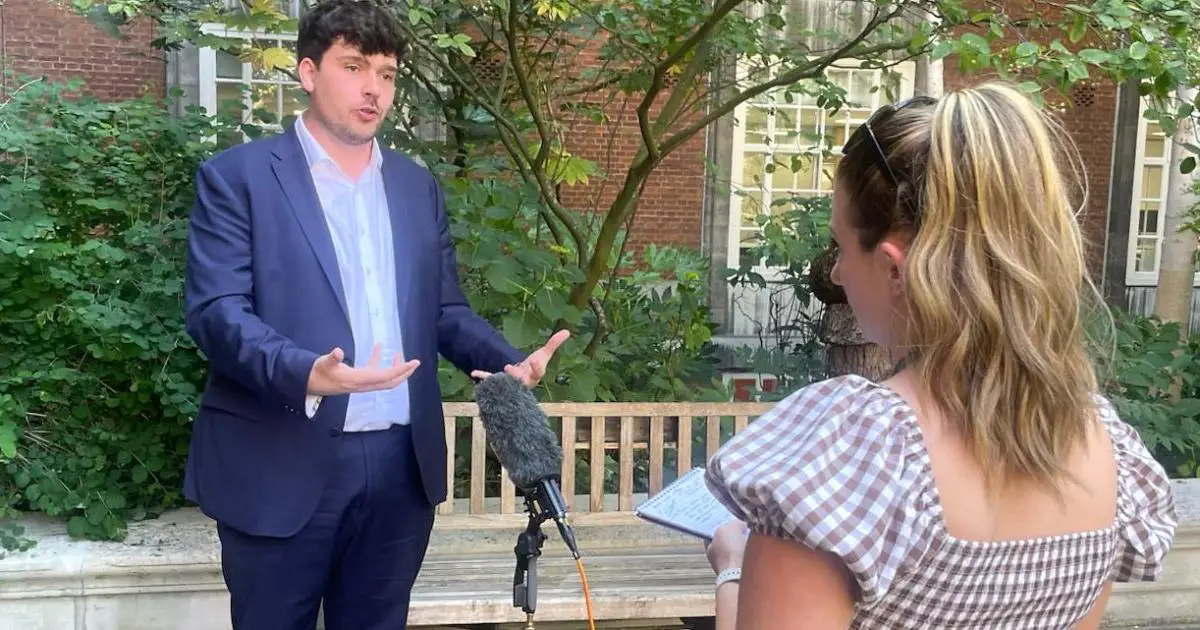

Strike action has been effective at bringing the Government to the negotiating table in the past, the British Medical Association (BMA) has said ahead of a four-day strike next month.
Dr Jack Fletcher, chairman of the BMA’s resident doctors’ committee, said doctors were being lost to other countries because they are not valued, as he urged the Government to settle the dispute.
His comments come as the BMA confirmed that resident doctors will strike from 7am on Monday June 15 to 6.59am on Friday June 19.
The announcement followed the union’s first talks with new Health Secretary James Murray on Wednesday, where they failed to reach a deal on pay and job protections.
When asked if previous strikes were effective, Dr Fletcher told the Press Association: “In response to the industrial action, I don’t agree that it hasn’t worked previously.

“In November, we wrote to the Health Secretary to come to the table, he didn’t respond, and therefore we announced industrial action which brought him to the table. That led to a number of things, including an offer.
“We put that off to our members in December, that was rejected and then we then took industrial action to get a better offer.
“We’ve been in discussions in January, February, March, and those discussions were very constructive, however, they fundamentally didn’t address the problems that we have.
“We are losing doctors to other countries because they are not valued.
“I don’t want to be taking further industrial action.
“I want to be getting an offer that we can put to our members to bring this dispute to a close, but fundamentally, that isn’t going to happen if the Health Secretary and this team are not willing to move on the previous offer.”
“Take-home pay remains a fifth lower in real terms than it was in 2008… We cannot be asked to negotiate in good faith for weeks, only to be told there is nothing left to negotiate about on pay.” @fletchjack
After weeks of talks, the Health Secretary has made it clear he won’t… pic.twitter.com/imkTMLSto6
— The BMA (@TheBMA) May 27, 2026
Last month, Sir Jim Mackey, chief executive of NHS England, warned hospital leaders to plan for a “long period of strikes” and suggested the NHS would seek to become less reliant on doctors in training if disruption continued.
Dr Fletcher warned moving further away from doctor-led care would worsen productivity in the NHS.
He said: “For the last decade or so we have seen dropping productivity in our NHS, despite employing more and more people, and a move away from doctor-led care.
“If you’re employing more people whilst moving away from doctor-led care, and therefore becoming less productive, why on earth would you want to continue that in the future?
“Fundamentally, we think the NHS is less productive, and NHS England agrees with that.
“I actually think we need more doctors. Other OECD (Organisation for Economic Co-operation and Development) countries have higher numbers of doctors in their healthcare systems, and they see better waiting list times, reduced A&E waits and improved access to GPs.
“This is why I said we should go in that direction, rather than continuing down this journey that was started a decade ago.”
Mr Murray, who was appointed after the resignation of Wes Streeting earlier this month, said he wanted a “productive relationship” with the BMA, but the union’s demands for further pay increases were “unrealistic, unaffordable, and unsustainable”.
Speaking after the strike action was announced, he said: “I’m disappointed that the BMA have refused to consider further discussions about how to strengthen the deal on the table and have instead rushed once again to unnecessary and unreasonable strike action.
“I was clear with the BMA that after a 33.4% pay rise for resident doctors over the last four years – the highest anywhere across the public sector – the BMA’s demands for further substantial pay increases this year are unrealistic, unaffordable, and unsustainable.
“These are simply not grounds for yet more strike action, which patients do not support, puts further pressure on other staff, and costs the NHS hundreds of millions of pounds.”
