

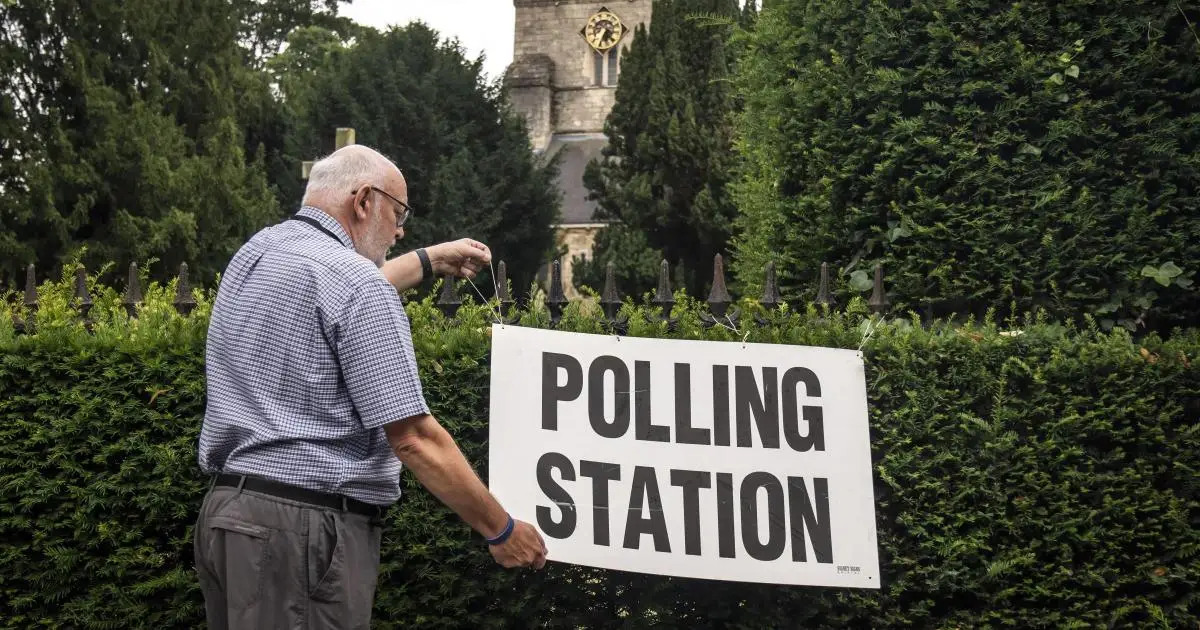

Voters in Scotland, Wales and many parts of England will go to the polls on Thursday May 7.
Millions of people are eligible to cast a ballot in the largest set of contests in the UK since the 2024 general election.
Here, the Press Association looks at what elections are happening and when to expect the results:
– What elections are taking place?
Elections are being held on May 7 for the Scottish Parliament and Senedd in Wales, as well as for 136 councils and six mayors in England.

Voters in Scotland will be able to choose new members of the 129-seat Parliament that sits in Edinburgh and which has the power to make laws on areas including health, education, housing, the police, transport, the environment and some types of taxation.
In Wales, voters will be choosing members of the Cardiff-based parliament known as the Senedd, which has been expanded at this election from 60 seats to 96 and which has the power to make laws on a narrower range of areas than its counterpart in Scotland, but which include health, education, transport and the environment.
Six local mayors are being elected in England, in Croydon, Hackney, Lewisham, Newham, Tower Hamlets and Watford.
The 136 local authorities holding elections in England comprise all 32 London boroughs; 48 district councils; 18 unitary authorities, including Hull, Milton Keynes, Portsmouth and Southampton; 32 Metropolitan boroughs, including Birmingham, Leeds, Manchester and Newcastle; and six county councils: East Sussex, Essex, Hampshire, Norfolk, Suffolk and West Sussex.
More than 5,000 seats are up for grabs across the 136 authorities.
– How many candidates are standing?
The Labour Party is fielding the most candidates in the local elections in England, at nearly 4,900, just ahead of Reform, which has close to 4,800, and the Conservatives, which have just over 4,700.
The Greens have almost 4,500 candidates and the Liberal Democrats just under 4,000, while there are more than 2,000 other candidates from minor parties, independents and residents’ groups.
In Scotland, the SNP, Labour, Conservatives, Liberal Democrats and Reform all have candidates in each of the 73 constituency seats, while the Greens are contesting just six of the 73.
In the eight regional seats in Scotland – each of which returns seven members to the parliament – the SNP, Labour, Conservatives, Lib Dems, Reform and Greens are all fielding candidates.
In Wales, a new system of voting has been adopted that has seen the country divided into 16 super-constituencies, each of which will send six members to the Senedd, with seats allocated proportionally according to the number of votes cast.
Labour, the Conservatives, the Lib Dems, Plaid Cymru, Reform and the Greens have a full slate of candidates in all the 16 constituencies.
– How many seats is each party defending?
In England, Labour are defending just over half of the council seats being contested, reflecting the party’s current strength in London and in Metropolitan boroughs, while just over a quarter are Conservative defences.
This is a different scenario from last year’s local elections, when the Tories were defending the greatest number of council seats, due to most of those contests being for county councils where the party was dominant.
Other parties are defending a smaller proportion of seats.
The Liberal Democrats are defending around 700 and the Greens nearly 200, while Reform are defending 80, mostly due to recent by-election victories or defections.
Boundary changes introduced at this year’s Scottish Parliament election mean that while some seats are unchanged, others have disappeared, been renamed, changed shape or are brand new, although there will still be 129 seats in the Parliament.
At the previous election in 2021, the SNP won 64 seats, one short of the number needed for an overall majority, while the Conservatives won 31 seats, Labour 22, the Greens eight and the Liberal Democrats four.
In Wales, the enlargement of the Senedd from 60 to 96 seats, together with the introduction of new constituencies and a change in the system of voting, means it will not be possible to compare directly the state of the parties before the election with what happens on polling day.
At the previous election in 2021, when the Senedd comprised 60 seats, Labour won 30, one short of an overall majority, the Tories won 16, Plaid Cymru 13 and the Lib Dems one.
– When do polling stations open?
Polling stations are open from 7am to 10pm on Thursday May 7.
Voters in England will need to show a photo ID to be able to cast a vote.
A passport, driving licence, armed forces veteran card and older person’s bus pass are among the valid forms of ID.
A photo ID is not needed to vote in the elections for the Scottish Parliament or Senedd.
– When will results be declared?
Ballot papers in Scotland and Wales will be counted during the daytime on Friday May 8, with the first results expected in the early afternoon and the final declarations due in the evening.
In England, 46 of the 136 local authorities holding elections will count and declare overnight, with results expected between 1am and 6am on May 8.
The majority of the remaining authorities will not begin counting until 9am on May 8 and are likely to start declaring results late in the morning and continue through to the evening.
All six mayoral results in England are due to be declared on the afternoon of May 8.
Four local authorities – Bradford, Croydon, Lewisham and Tower Hamlets – are counting on Saturday May 9, with a full set of results likely by the evening.