

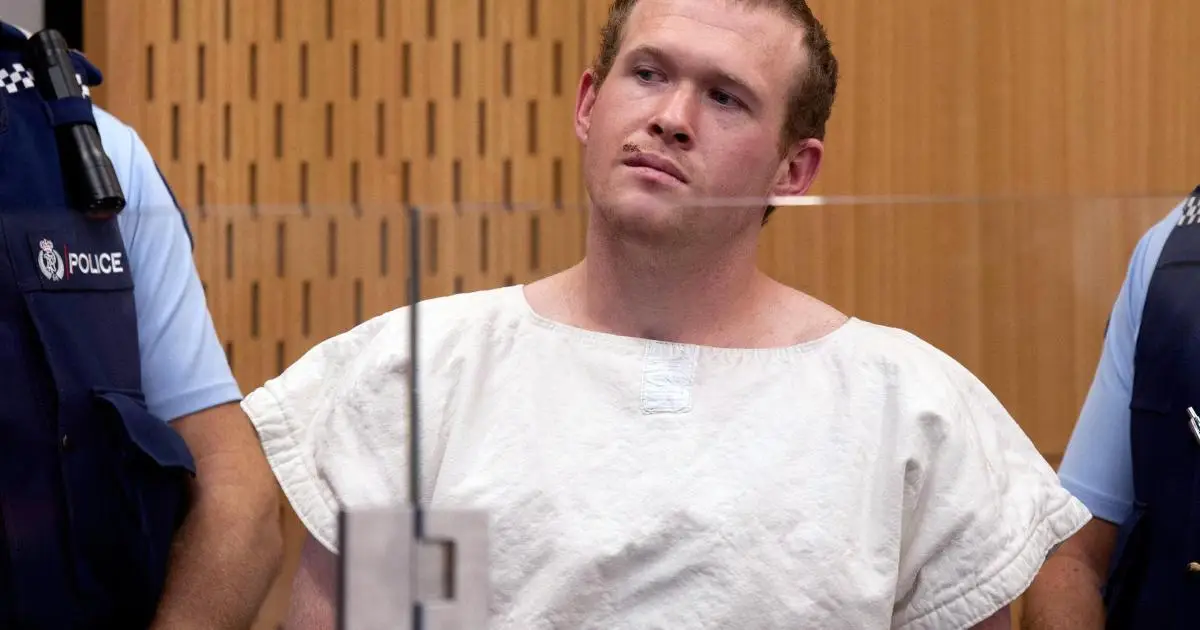

The white supremacist who shot and killed 51 Muslims at two mosques in Christchurch, New Zealand, has lost an attempt to undo his guilty pleas in an appeal court ruling.
The panel of three judges at New Zealand’s Court of Appeal dismissed Brenton Tarrant’s claim that harsh prison conditions prompted him to make an involuntarily admission to terrorism, murder and attempted murder charges.
Tarrant’s bid to withdraw his guilty pleas and seek a trial was “utterly devoid of merit”, they wrote.
The Australian man, who is now 35, killed 51 worshippers and injured dozens more in March 2019 when he drove to two Christchurch mosques and opened fire with semiautomatic weapons during Friday prayers.
Tarrant’s guilty pleas in March 2020 brought relief to bereaved families and survivors of the attack, who feared he would use a public trial to air his hateful views.

The dismissal of his appeal appears to end the possibility of Tarrant ever facing a trial, a prospect that lawyers representing some of his victims – who included men, women and children as young as three – said had been “unimaginably traumatic”.
The court noted the gunman’s bid was made 505 days after the legal deadline for it to be filed. Tarrant had “failed by a considerable margin to adequately explain the extraordinarily long delay” in seeking an appeal, the judgment said.
At the court’s five-day hearing in February, the attacker argued his admissions of guilt were provoked by “irrationality” induced by poor mental health, which led him to desert his racist views for a time.
The judges concluded, however, that his claims of mental illness were not supported by prison staff, mental health professionals or lawyers who had earlier represented him.
The court added that Tarrant also did not meet the legal definition of unfitness to plead guilty, a point he had admitted.
“He was not suffering from a mental impairment or any other form of mental incapacity which rendered him unable to voluntarily change his pleas to guilty,” the judges wrote in Thursday’s ruling.
“He endeavoured to mislead us about his state of mind in a weak attempt to advance an appeal in circumstances where all other evidence demonstrated that he made an informed and totally rational decision to plead guilty.”
The court’s decision also revealed that Tarrant sought to abandon his appeal shortly after making his case at the hearing in February. The judges rejected that bid too, writing that the case was “of significant public interest and should be finally determined”.
They suggested that Tarrant “began to form the opinion that the hearing was not proceeding in his favour, and as a result decided to file a notice of abandonment after the hearing concluded.”
New Zealand law does not automatically allow an appellant to quit an appeal bid once it is under way.
The shooter’s complaints about his prison conditions included that he was kept away from other prisoners without anything to do and was under constant surveillance. The judges, however, said his solitary confinement was necessary because Tarrant was at risk for suicide or self-harm.
“He was monitored because of concerns about his welfare and not to torment him or treat him cruelly,” they wrote.
The shooter “was not coerced or pressured in any way” to plead guilty, the judges said. In fact, they added, Tarrant rejected his lawyers’ offer to attempt to negotiate away the terrorism charge because he wanted to be known as a terrorist.
Tarrant, who has fired the lawyers who were acting for him in February, remains in Auckland Prison, where he was sentenced in August 2020 to spend life in prison without the chance of parole.
The judges allowed him to abandon his appeal against that sentence, which was scheduled to be heard later in 2026.