

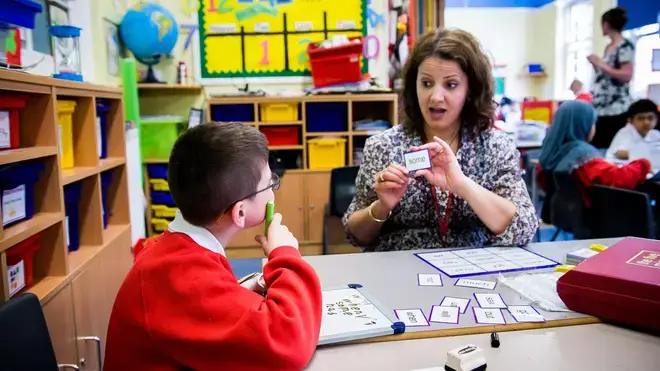

Teachers warn that class sizes and staff shortages are hindering support for pupils with special educational needs, as the Government rolls out reforms
Share
Nearly nine in 10 teachers say class sizes are too big for schools to properly support pupils with special educational needs and disabilities (SEND).
A survey from the National Education Union (NEU) found that more than four in five (83 per cent) teachers think a lack of staff is a significant barrier to their school fully serving SEND pupils.
A further 15 per cent said a lack of staff is a minor barrier.
NEU general secretary Daniel Kebede said the findings show mainstream schools are not resourced or staffed to cope with current levels of need.

The funding planned to back the Government's reforms to the SEND system must be increased, he said.
Just one in five (22 per cent) of the 10,311 NEU members surveyed said they were confident that referring a pupil for SEND assessment, diagnosis, or support would actually get them the help they need.
Mr Kebede said: "All children must have ready access to special needs support from their school without a long bureaucratic process. The planned Inclusion Grant must be increased."
"Schools need significantly more resources to allow the Government's ambitions, as set out in the White Paper, to be achievable," he added.
Under the Government's reforms to the SEND system, schools across England will have a statutory duty to draw up a digital individual support plan (ISP) for every child with SEND. Children currently with an education, health and care plan (EHCP) will have it reviewed when they reach the end of primary or secondary school.
EHCPs, the legal documents setting out the support a child with SEND is entitled to, will still exist for children needing the highest level of support.
The reforms will be backed by £1.6 billion for mainstream schools, colleges and early years settings over three years to help them become more inclusive.
In addition, £1.8 billion over three years will go towards creating a bank of specialists in every area, such as SEND teachers and speech and language therapists, that schools can draw from, and £200 million towards SEND teacher training.
Mr Kebede said the average primary school will receive around £13,000 in funding for inclusion, which could be swallowed up if they have to make efficiencies to fund a teacher pay rise.
Four in five (83 per cent) teachers said extra funding for more classroom support would have a major impact on SEND provision at their school.
Nearly three in four (73 per cent) said funding for schools to access specialists would also have a major impact.
A Department for Education spokesperson said: "This Government is fiercely ambitious for every single child, and that's why we've brought forward once-in-a-generation SEND reforms to put inclusion at the heart of education.
"We're backing schools and teachers with more resources and expertise through our £4 billion investment to improve teacher and support staff training on SEND, making sure every education setting has easy access to SEND specialists, and funding directly for schools to make changes that improve inclusion."