

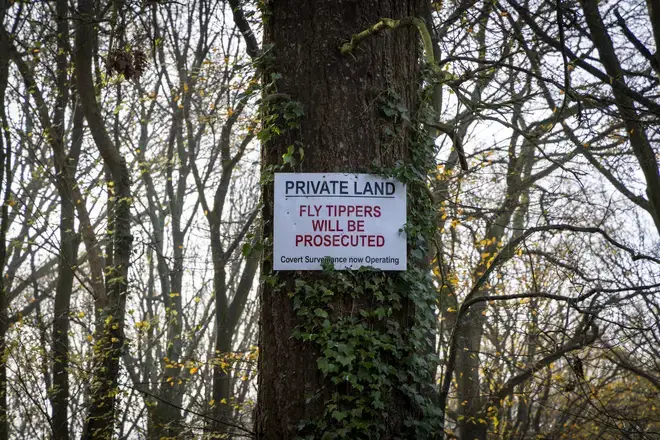

The new plans aim at reducing illegal waste dumping and restore pride in communities
Share
Fly-tippers could be forced into “clean-up squads” to tidy up mess in the areas where they have illegally dumped waste under new Government plans.
Councils will also be given new powers to seize money directly from fly-tippers to fund clean-up operations, the Environment Department (Defra) said.
The measures form part of a new waste crime action plan which is being unveiled on Friday, and comes as the latest figures show fly-tipping on public land rose 9% last year to record highs, with people carrying out “brazen” acts of illegal waste dumping in streets and other spots.
Under the proposals, councils would get powers to issue fly-tippers with “conditional cautions”, instead of being taken to court, which could see offenders complete up to 20 hours of unpaid work to clean up streets, parks and the places where they were caught dumping rubbish.

Currently, fly-tippers can only be punished after being convicted, with fines, or community or even prison sentences, officials said, with the new plans aiming to speed up enforcement, clamp down on illegal waste dumping and restore pride in communities.
Want LBC stories before everyone else? Set us as your Preferred Source on Google
Environment Secretary Emma Reynolds said: “If you dump rubbish on our streets, you will be joining a clean-up squad and picking up the bill, not the taxpayer.
“We are clamping down on these criminals, making sure those responsible clean up and pay up.
“This Government is handing both the Environment Agency and local authorities the power to boost waste crime enforcement, hand out tougher sentences and tackle illegal dumping faster.”
It forms part of the waste crime action plan which aims to crack down on waste offences from small-scale fly-tipping to large illegal waste sites, such as the 150-metre-long dump near the River Cherwell in Oxfordshire and a 30,000-tonne heap in the protected area of Hoads Wood in Kent.
Fly-tippers could also face points on their licence, while councils are being urged to seize and crush vehicles used in waste dumping, and the Environment Agency will use “drone squads” to capture more evidence of illegal waste sites and software to flag HGVs being used to dump illegally.
The Local Government Association, which represents town halls, has also called on the Government and Sentencing Council to urgently review sentencing guidelines for fly-tipping, as court fines are lower on average than penalties handed out directly by local authorities.
Arooj Shah, chair of the LGA’s neighbourhoods committee, said: “Councils want to work with Government to tackle the scourge of fly-tipping and protect our communities from environmental crime.
“New powers such as conditional cautions could give councils another tool to deal with offenders, but they will need to be properly resourced and supported if councils are to use them in practice.”
But she added that stronger deterrents were also needed.
She said: “Court fines for fly-tipping are on average lower than the penalties councils issue, which weakens enforcement.
“Sentencing guidelines must be reviewed so punishments properly reflect the seriousness of the offence and the harm it causes to communities.”
