


Share
A man who was wrongly jailed for 38 years for murder is still waiting for compensation despite being released almost a year ago.
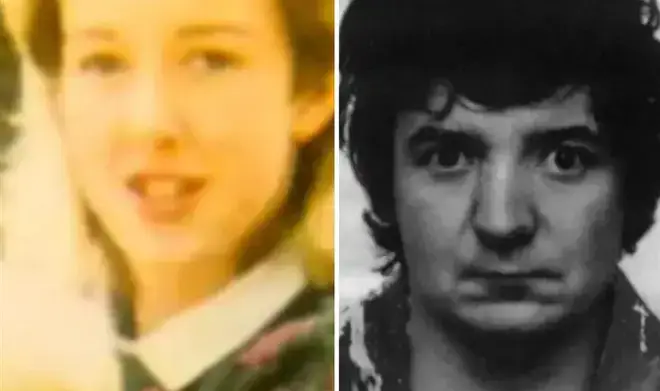
Peter Sullivan, 68, was nicknamed ‘The Beast of Birkenhead’ and was locked up for life back in 1987 after being convicted of murdering Diane Sindall on the Wirral a year earlier. But, in May last year, he was acquitted in the Court of Appeal following the discovery of new DNA evidence.
Having spent the best part of four decades behind bars, his ability to adapt to normal life is now being hindered by a drawn out process for the compensation that will allow him to live out his final years in comfort.
Sarah Myatt is Peter Sullivan’s solicitor, she told LBC: “The compensation scheme is long, it's arbitrary, it is just so frustrating to have to go through.
“He was released last May and that application is still being processed. We have done everything that we can do to, to make sure that that is submitted as quickly as possible, but the application process asks for so much.
“I think I remember back when he was released, there was a mention in Parliament about his compensation claim ought to be prioritised. I'm sorry, but if this is prioritising then, you know, we're nearly a year on and we're still not at the end of that application, all through that time, this is somebody that then has to live with very little income, with very little financial support, and that's just not right, is it?”
Speaking in Parliament in May last year, Lord Ponsonby said: “We would encourage Mr Sullivan to make an application to the miscarriage of justice application service, and we will prioritise his application because of the length of his prison sentence.”
Ms Myatt added: “The system really needs to be looked at, modernised, made less difficult to have to prove that you are entitled to compensation, because that's the first hurdle. Then even after that, the assessment of how much just takes far too long, unnecessarily, in my view.
“Peter is a 68 year old man. He now can't work, he's past retirement age, and let's be honest, he shouldn’t have to (work) after what he's lost four decades of his life.
“But, that means that financially he's not in the best position, and this is where the state should say, yep, you have been wronged, this will be processed quickly and dealt with swiftly to make sure that your life can then be comfortable from now on in.”
Under current rules, anyone who is freed after wrongful conviction still has a mountain to climb to be eligible for compensation because ven after being cleared, they are required to prove their innocence “beyond reasonable doubt”.
“Instead it is a long, very difficult process to have to go through”, Ms Myatt said. “The compensation scheme is not straightforward, the first hurdle is to prove that you're actually entitled to compensation. Just because your conviction has been quashed does not mean to say that you are entitled to compensation. You have to show on the balance of probabilities that you are not the person that committed the offence.
“There are other victims of miscarriage of justice who have had their convictions quashed who are not eligible for compensation because they can't prove on the balance of probabilities that they were not the person who committed the offence. So, it's not automatic and it's not straightforward. You could be somebody that is entirely innocent, who's been convicted of an offence and then had that conviction overturned, been released, but unless you can show that you didn't actually commit the offence, you will not get a penny in compensation.
“For somebody to be eligible, they really need, like in Peter's case, DNA evidence, scientific evidence, forensic evidence that shows through the science, through the forensics, that this person is not actually the person who committed the offence, it's somebody else. That means there are far more miscarriage of justice victims who are not eligible for compensation and very, very few that are, and that is just not right, in my opinion.”
Diane Sindall’s killer remains at large, and there is now a £20,000 reward for help in convicting the right person.
